How CS2 VAC Ban System Works & Prime Status Impact
Learn how the VAC ban system works in CS2 and whether Prime status or playtime reduces ban likelihood for suspicious behavior.
How does the VAC ban system work in CS2, and do purchasing Prime status and accumulating playtime reduce the likelihood of receiving temporary bans for suspicious behavior?
The VAC ban system in CS2 is Valve’s automated anti-cheat technology that scans players’ computers for cheat signatures and third-party modifications to game files, permanently banning offenders from all VAC-secured servers. Importantly, purchasing Prime status or accumulating playtime does not reduce the likelihood of receiving temporary or permanent bans for suspicious behavior, as VAC bans are issued automatically based on detected cheat software and are not influenced by account perks.
Contents
- How the VAC Ban System Works in CS2
- Understanding Prime Status in CS2
- Do Prime Status and Playtime Reduce Ban Likelihood?
- Types of Bans in CS2: VAC vs. Temporary vs. Competitive Cooldowns
- What Happens After a VAC Ban in CS2
- How to Avoid Bans in CS2
How the VAC Ban System Works in CS2
The VAC (Valve Anti-Cheat) system in CS2 functions as Valve’s automated cheat-detection engine designed to maintain game integrity. When you play CS2, VAC continuously scans your computer for cheat signatures and any third-party modifications to the game’s core files and DLLs. This means the system doesn’t just look for obvious cheat programs—it detects subtle alterations that could provide unfair advantages.
Here’s how it actually works under the hood: When VAC detects prohibited modifications or cheat software, it automatically issues a permanent ban tied to your Steam account. This ban prevents you from joining any VAC-protected servers across the entire Steam ecosystem, not just in CS2. The detection process happens silently and without warning—you might be playing normally one moment and discover you’ve been banned the next.
What makes this system particularly strict is that it’s completely automated. According to CS2 Pulse, “The VAC system in CS2 is an automated cheat-detection engine that scans a player’s computer for cheat signatures and third-party modifications to the game’s core files and DLLs.” There’s no manual review process for standard VAC bans, which explains why they’re issued so quickly and consistently.
The ban is also permanent and irreversible. Once you receive a VAC ban, it remains on your account permanently, and you cannot appeal it through normal channels. This differs from other types of bans that might be temporary or reviewable. The severity of this penalty reflects how seriously Valve takes cheating and the importance of maintaining fair play in CS2.
Understanding Prime Status in CS2
Prime status is a premium feature in CS2 that was introduced to improve the matchmaking experience by separating players with verified phone numbers from those without. When you purchase Prime status, you gain access to more competitive matchmaking features, but it doesn’t change how VAC operates.
Prime status works by adding an extra layer of verification to your account. To obtain Prime status, you need to link a verified phone number to your Steam account and reach level 21 in CS2. This verification process helps reduce the prevalence of smurf accounts and cheaters in matchmaking pools.
However, it’s crucial to understand that Prime status doesn’t provide any immunity to VAC bans. The CS2.Ad guide clarifies this point: “Prime status and accumulated playtime do not affect the ban; they do not reduce the likelihood of temporary bans or unlock any restricted modes.”
Many players mistakenly believe that having Prime status makes their account “safer” from bans, but this isn’t the case. Prime status is purely a matchmaking feature that aims to improve the quality of games by separating verified players from unverified ones. It doesn’t change how VAC detects or issues bans, nor does it provide any special protection against detection.
Do Prime Status and Playtime Reduce Ban Likelihood?
This is the core question, and the answer is clear and definitive: No, purchasing Prime status and accumulating playtime does not reduce the likelihood of receiving temporary bans for suspicious behavior.
According to multiple authoritative sources, VAC bans operate independently of account status or playtime. The CS2 Pulse article explains: “Having Prime status or accumulating playtime does not reduce the likelihood of receiving temporary or permanent bans for suspicious behavior, as VAC bans are issued automatically based on detected cheat software or file modifications.”
The reason for this is how VAC actually functions. It doesn’t consider account status, playtime, or any other factors when making ban decisions. Instead, it operates on a simple principle: if it detects prohibited modifications or cheat software, it issues a ban. The detection process is automated and based solely on technical evidence, not account standing.
The Tradeit.gg blog confirms this understanding: “Prime status and accumulated playtime do not influence the likelihood of receiving temporary or permanent bans for suspicious behavior; VAC bans are issued automatically by Valve’s anti-cheat system and are not mitigated by account perks or longevity.”
This means that regardless of how much you’ve played, how long you’ve had Prime status, or how invested you are in your account, if you’re detected using cheats or modifying game files, you will face a ban. The system doesn’t distinguish between new and veteran players, Prime or non-Prime accounts—it treats all players equally in terms of enforcement.
Types of Bans in CS2: VAC vs. Temporary vs. Competitive Cooldowns
Understanding the different types of bans in CS2 is crucial because not all bans are created equal. While VAC bans are permanent and severe, other types of penalties exist that serve different purposes.
VAC bans are the most serious type of ban. As we’ve discussed, they’re permanent, account-wide, and issued automatically when cheat software is detected. VAC bans affect your ability to play on any VAC-protected server across all Steam games, not just CS2. These bans are non-negotiable and cannot be appealed through normal channels.
Temporary bans, on the other hand, are typically issued for less severe offenses. These might include griefing, intentionally feeding, team killing, or other disruptive behaviors that don’t necessarily involve cheating. Temporary bans usually last for a specific duration (ranging from days to weeks) and affect your ability to participate in matchmaking during that period.
Competitive cooldowns are another type of penalty that players frequently encounter. These are issued for abandoning matches, being AFK, or other matchmaking-related infractions. The duration of competitive cooldowns increases with each offense—starting at 30 minutes for the first offense and escalating to longer periods for repeated violations.
Importantly, Prime status and playtime don’t influence any of these ban types. Whether you receive a temporary ban or a competitive cooldown depends entirely on your behavior during matches, not on your account status or how long you’ve been playing.
The CS2 Pulse article on false bans notes: “False bans have occurred in rare cases, but Valve typically reviews and removes them quickly.” This applies primarily to VAC bans, as temporary bans and competitive cooldowns are often reviewed by human moderators or automated systems that consider context.
What Happens After a VAC Ban in CS2
Receiving a VAC ban in CS2 has significant consequences that affect your entire Steam account, not just your ability to play CS2. When you’re VAC banned, the penalty is immediate and comprehensive.
First and most obviously, you lose access to all VAC-secured matchmaking in CS2. This means you can no longer play Competitive, Premier, Wingman, or any other ranked game modes. You also lose access to weekly drops and other Prime matchmaking features if you had them.
But the impact extends beyond CS2. A VAC ban on your Steam account prevents you from playing on VAC-protected servers in any game that uses Valve’s anti-cheat system. This means you can’t play on official servers for games like Team Fortress 2, Left 4 Dead 2, or any other title that uses VAC protection.
The Tradeit.gg blog explains: “A VAC-banned Steam account is automatically blocked from all VAC-protected servers across the entire Steam ecosystem, including the new Counter-Strike 2. The ban is permanent, non-negotiable, and tied to the Steam account, not to a specific game installation.”
Interestingly, you can still launch CS2 and play on non-VAC servers, offline modes, or community servers that don’t use VAC protection. You can also still use skins and other items you already own, though you can’t trade them on the marketplace. However, you cannot earn ranks or participate in Prime matchmaking.
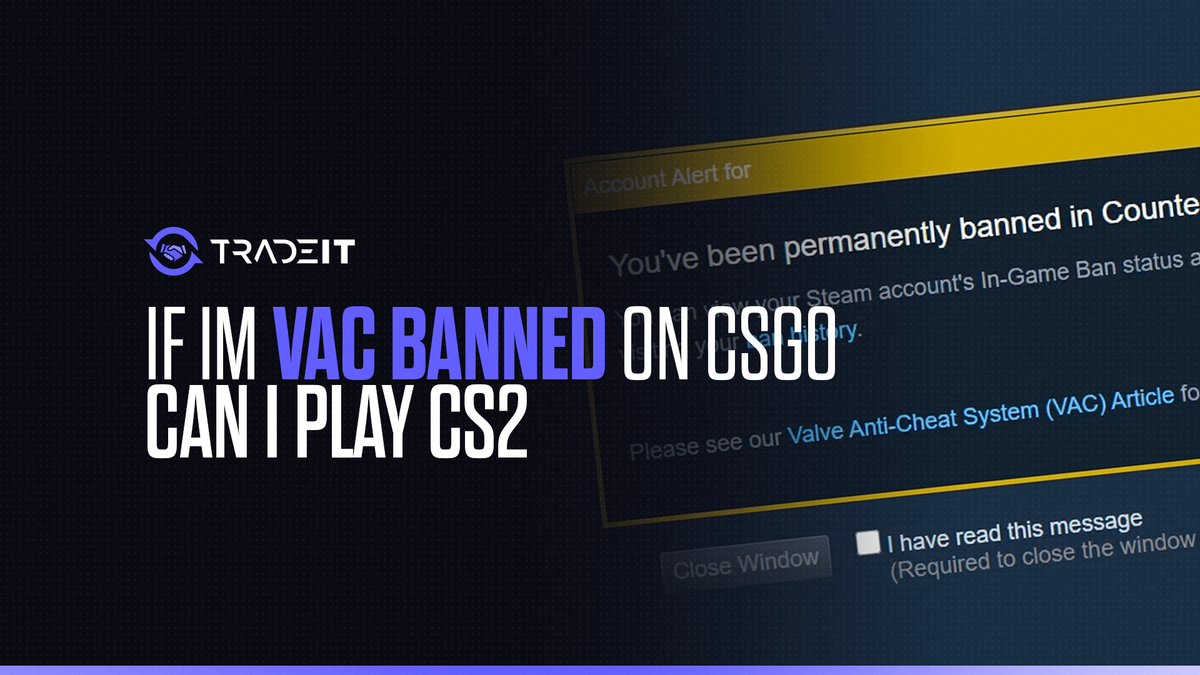
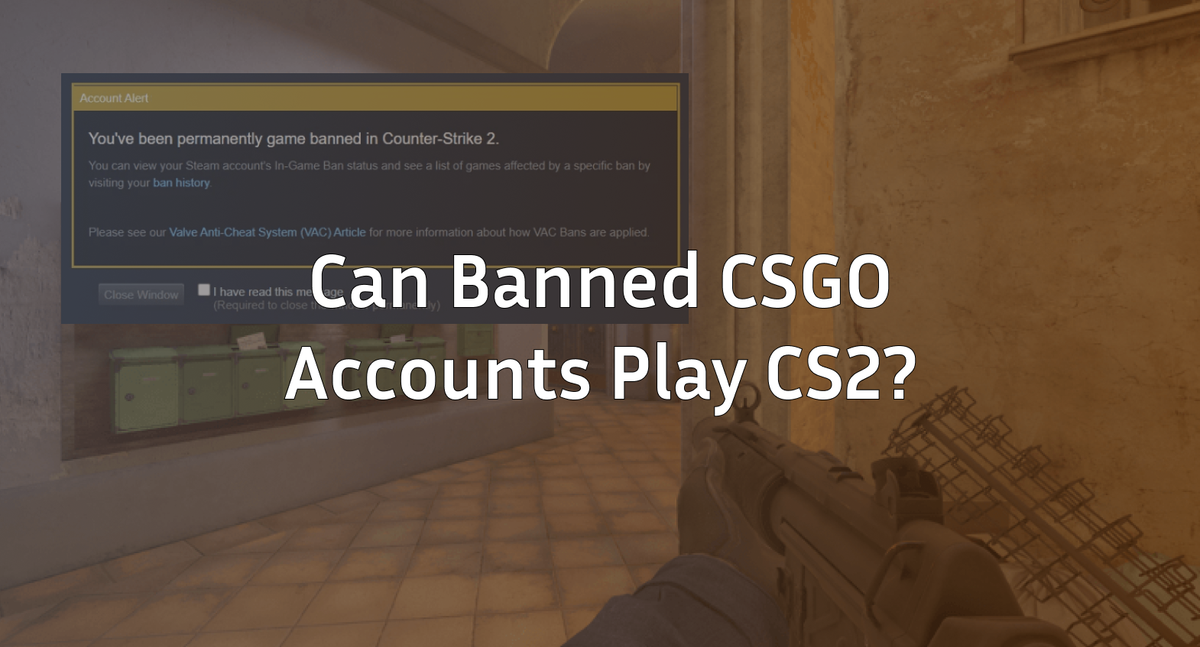
If you had a CS:GO VAC ban before CS2’s release, it automatically carries over to the new game. The CS2.Ad guide confirms: “If your Steam account has a CSGO VAC ban, that ban automatically carries over to CS2, locking you out of all VAC-secured matchmaking.”
VAC bans also affect your account’s reputation and trading capabilities. Many trading communities and marketplaces restrict or ban VAC-banned accounts from participating, as these accounts are often associated with cheating or other undesirable behaviors.
How to Avoid Bans in CS2
Avoiding bans in CS2 is straightforward if you understand what triggers them and commit to fair play. The most important rule is simple: don’t use cheats or modify game files. This is the primary way to avoid VAC bans.
The CS2 Pulse article emphasizes: “If you are not cheating, you will not get VAC banned. VAC is designed to detect cheat software or modifications to the game files that provide an unfair advantage. As long as you haven’t installed cheats or tampered with CS2’s files, you won’t trigger a VAC ban.”
Beyond avoiding cheats, there are other steps you can take to minimize your risk of receiving any type of ban:
-
Don’t modify game files: This includes editing configuration files, installing custom HUDs, or using any third-party software that alters how CS2 functions. Even seemingly harmless modifications can trigger VAC bans.
-
Be careful with overlays: Some third-party overlays (like Discord’s in-game overlay or streaming software overlays) can sometimes conflict with VAC. While most are safe, be cautious and disable overlays if you experience issues.
-
Avoid sharing accounts: Sharing your Steam account with others increases the risk of someone cheating on your behalf, which would result in a VAC ban tied to your account.
-
Play fairly: Avoid intentionally griefing, team killing, or AFK behavior that could result in temporary bans or competitive cooldowns.
-
Don’t use information from cheaters: Even if you’re not running cheats yourself, using information provided by a cheating teammate can sometimes result in bans through the Overwatch system.
Remember that VAC bans are permanent and cannot be appealed. The only way to recover from a VAC ban is to create a new Steam account, which means losing all your skins, ranks, and progress. Prevention is far better than trying to recover from a ban.
Sources
- CS2 Pulse - What Is A VAC Ban — Explanation of how the VAC ban system works in CS2: https://cs2pulse.com/what-is-a-vac-ban/
- CS2 Pulse - Can You Get VAC Banned Without Cheating — Information about false bans and VAC detection accuracy: https://cs2pulse.com/can-you-get-vac-banned-without-cheating/
- Tradeit.gg Blog - If I’m VAC Banned on CSGO Can I Play CS2 — Details about VAC bans carrying over from CS:GO to CS2: https://tradeit.gg/blog/if-im-vac-banned-on-csgo-can-i-play-cs2/
- CS2.Ad - Can Banned CSGO Accounts Play CS2 - Comprehensive guide on banned accounts in CS2: https://blog.cs2.ad/can-banned-csgo-accounts-play-cs2/
Conclusion
The VAC ban system in CS2 is an automated, zero-tolerance anti-cheat mechanism that permanently bans players detected using cheats or modifying game files, regardless of their Prime status or playtime. Your account standing—whether Prime or not, whether new or veteran—makes no difference to how VAC operates. The system scans for prohibited software and issues bans automatically based on technical evidence alone. To avoid bans in CS2, the solution is clear: play fairly, avoid cheats, and don’t modify game files. While temporary bans and competitive cooldowns exist for other infractions, VAC bans remain the most severe penalty, permanently affecting your ability to play on secured servers across Steam. Remember that prevention is your only defense—once a VAC ban is issued, it cannot be removed.

The VAC system in CS2 is an automated cheat-detection engine that scans a player’s computer for cheat signatures and third-party modifications to the game’s core files and DLLs. When it finds such evidence, it permanently bans the user from all VAC-secured servers, meaning the player can no longer play competitive or official matches. The VAC ban is irreversible and is intended to protect the integrity of the game. Importantly, having Prime status or accumulating playtime does not reduce the likelihood of receiving temporary or permanent bans for suspicious behavior, as VAC bans are issued automatically based on detected cheat software or file modifications.
If you are not cheating, you will not get VAC banned. VAC is designed to detect cheat software or modifications to the game files that provide an unfair advantage. As long as you haven’t installed cheats or tampered with CS2’s files, you won’t trigger a VAC ban. This isn’t just community speculation—Valve clearly states this on their official Steam Support page. False bans have occurred in rare cases, but Valve typically reviews and removes them quickly. However, you may still get banned through Overwatch even if you’re not running cheats yourself but knowingly use information provided by a cheating teammate. Prime status and accumulated playtime do not affect this ban detection mechanism.

The VAC ban system in CS2 works exactly the same as it did in CS:GO: a VAC-banned Steam account is automatically blocked from all VAC-protected servers across the entire Steam ecosystem, including the new Counter-Strike 2. The ban is permanent, non-negotiable, and tied to the Steam account, not to a specific game installation. Because of this, a VAC ban earned in CS:GO will carry over to CS2 and prevent you from joining any official, VAC-secured servers in the new title. Prime status and accumulated playtime do not influence the likelihood of receiving temporary or permanent bans for suspicious behaviour; VAC bans are issued automatically by Valve’s anti-cheat system and are not mitigated by account perks or longevity.

The VAC ban system in CS2 works exactly like it did in CSGO: a permanent, account-level ban issued by Valve when cheating software is detected. If your Steam account has a CSGO VAC ban, that ban automatically carries over to CS2, locking you out of all VAC-secured matchmaking (Competitive, Premier, Wingman, ranked, weekly drops, Prime matchmaking). You can still launch CS2, play offline, on non-VAC community servers, in practice modes, custom maps, and use skins you already own, but you cannot earn ranks or participate in Prime matchmaking. Prime status and accumulated playtime do not affect the ban; they do not reduce the likelihood of temporary bans or unlock any restricted modes.


