Why do I sometimes sleep for 9 hours and wake up feeling tired, but other times sleep for 5 hours and wake up feeling energized, and what factors determine sleep quality?
Sleep quality matters more than duration when it comes to feeling refreshed. You can sleep for 9 hours and still wake up exhausted if your sleep is fragmented, while just 5 hours of uninterrupted, quality sleep can leave you feeling energized. The key factors affecting sleep include your sleep cycles, stress levels, sleep environment, and overall health.
Contents
- Understanding Sleep Quality vs. Duration
- The Science of Sleep Cycles and Restoration
- Factors That Determine Sleep Quality
- Why More Sleep Doesn’t Always Mean Better Rest
- How to Improve Your Sleep Quality
- Optimizing Your Sleep for Maximum Energy
- Sources
- Conclusion
Understanding Sleep Quality vs. Duration
Sleep quality and sleep duration are two distinct aspects of rest that don’t always align. While most adults need 7-9 hours of sleep per night, the actual number is less important than how restorative that sleep is. Think of it as eating calories versus getting proper nutrition—you might consume 2,000 calories, but if they’re mostly junk food, your body won’t function optimally. Similarly, you can spend 9 hours in bed, but if your sleep is poor quality, you won’t feel rested.
The difference between 5 hours of quality sleep and 9 hours of poor sleep often comes down to sleep architecture—how your body cycles through different sleep stages. When these cycles are complete and uninterrupted, you wake up feeling refreshed regardless of whether you technically slept “enough” hours. But when stress, anxiety, or environmental factors disrupt these cycles, your brain can’t complete the restorative processes, leaving you feeling tired even after a long night in bed.
The Science of Sleep Cycles and Restoration
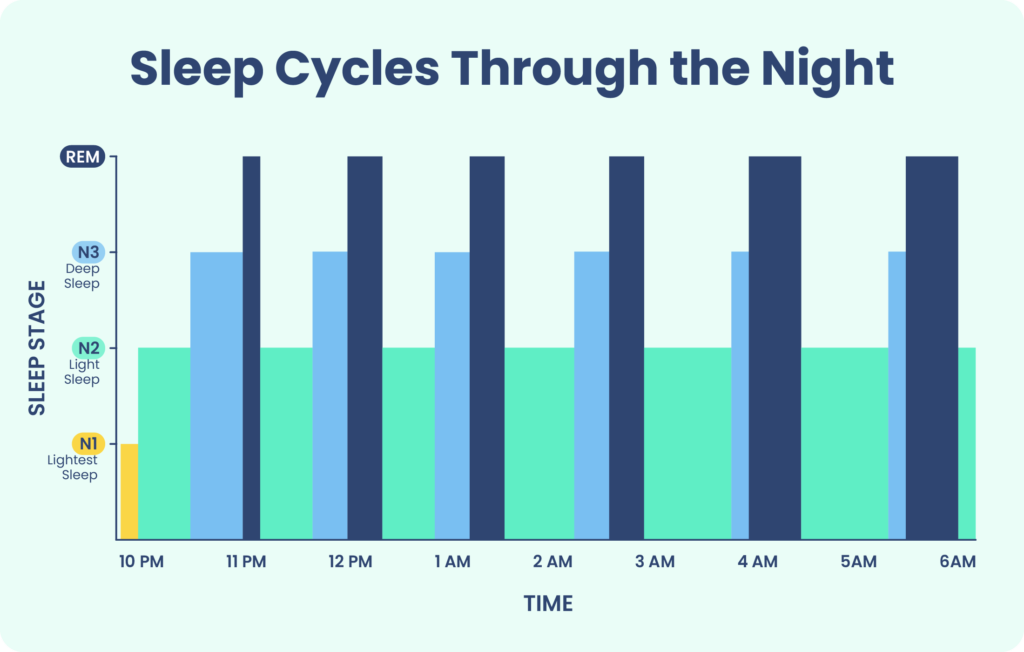
Sleep isn’t a single state but rather a cycle of different stages that repeat throughout the night. Each complete sleep cycle lasts approximately 90-110 minutes and includes several distinct phases:
- Light sleep (N1 and N2): The transition between wakefulness and deeper sleep
- Deep sleep (N3): The most physically restorative stage, crucial for tissue repair and immune function
- REM sleep: Essential for memory consolidation, emotional processing, and learning
When you complete these full cycles, your brain has time to perform essential maintenance tasks. But when your sleep is fragmented—waking up frequently during the night—you jump between sleep stages, never allowing your brain to stay in the restorative deep sleep or REM phases long enough to complete the job. This explains why you might feel exhausted after 9 hours of interrupted sleep but surprisingly alert after just 5 hours of uninterrupted sleep that happened to align with your natural sleep cycles.
According to sleep research, the first half of the night tends to have more deep sleep, while the latter half contains more REM sleep. This is why going to bed and waking up at consistent times helps maintain these natural patterns, allowing your body to complete its restorative work efficiently.
Factors That Determine Sleep Quality
Several key factors influence sleep quality beyond just the number of hours spent in bed:
Mental health and stress levels: Anxiety and depression can significantly impact sleep quality. Research shows that people with poorer mental health sleep about an hour less (6.3 hours vs 7.2 hours) and are three times more likely to rate their sleep as poor or very poor. Stress triggers the release of cortisol, which can make it difficult to fall asleep and cause frequent awakenings throughout the night.
Sleep environment: Your bedroom should be cool (around 65°F or 18°C), dark, and quiet. Light exposure, especially blue light from screens, can suppress melatonin production and disrupt your natural sleep-wake cycle. Noise pollution, even at levels you don’t consciously notice, can fragment sleep and reduce deep sleep duration.
Lifestyle habits: What you eat, drink, and do during the day affects your sleep at night. Caffeine and alcohol can interfere with sleep architecture, while regular exercise (but not too close to bedtime) promotes deeper sleep. Eating large meals close to bedtime can cause digestive issues that disrupt sleep.
Age and individual differences: Sleep needs change throughout life. Older adults typically experience lighter sleep and more nighttime awakenings, while teenagers often need more sleep due to developmental processes. Some people are naturally “short sleepers” who function well on 5-6 hours, while others need closer to 9 hours for optimal functioning.
Medical conditions: Chronic pain, respiratory issues like sleep apnea, hormonal imbalances, and many other medical conditions can severely impact sleep quality without necessarily reducing total sleep time.
Why More Sleep Doesn’t Always Mean Better Rest
The paradox of feeling tired after 9 hours but refreshed after 5 hours comes down to how sleep fragmentation affects your restorative processes. When you experience frequent awakenings—even brief ones you don’t remember—your sleep becomes fragmented, jumping you from deep sleep to lighter stages repeatedly.
This fragmentation has several consequences:
- Reduced deep sleep: Deep sleep is crucial for physical restoration. Each time you’re interrupted, you lose the opportunity to stay in this restorative stage.
- Decreased REM sleep: REM sleep is vital for memory consolidation and emotional regulation. Fragmented sleep reduces the amount of time you spend in this critical phase.
- Cortisol disruption: Waking up frequently can lead to elevated cortisol levels, making it harder to fall back asleep and leaving you feeling stressed and tired.
Life stressors like divorce, illness, or multiple major life changes can cut sleep by 20-30 minutes and double the chance of below-average sleep quality. These stressors activate the body’s fight-or-flight response, keeping you in a state of heightened alertness even when you should be sleeping.
Interestingly, when you get a full seven to nine hours of uninterrupted sleep, your brain can complete the full cycle of stages, allowing you to feel refreshed even if you slept a bit less than your usual 9 hours. The key is continuity and completeness of sleep cycles, not just quantity.
How to Improve Your Sleep Quality
Improving sleep quality involves both addressing immediate issues and building long-term healthy sleep habits:
Create a sleep-conducive environment: Make your bedroom a sanctuary for sleep. Invest in blackout curtains, use a white noise machine or earplugs if necessary, and keep the temperature cool. Consider removing all electronics from the bedroom to eliminate temptation and reduce blue light exposure.
Establish a consistent schedule: Go to bed and wake up at the same time every day, even on weekends. This helps regulate your body’s internal clock, making it easier to fall asleep at night and wake up feeling refreshed in the morning.
Develop a relaxing bedtime routine: Spend 30-60 minutes before bed doing calming activities like reading, gentle stretching, or meditation. Avoid stimulating activities, stressful conversations, and intense exercise close to bedtime.
Be mindful of what you consume: Limit caffeine intake, especially in the afternoon and evening. Avoid heavy meals, spicy foods, and excessive liquids close to bedtime. While alcohol might make you feel sleepy initially, it significantly disrupts sleep architecture later in the night.
Manage stress and anxiety: Practice stress-reduction techniques throughout the day, such as mindfulness, deep breathing exercises, or journaling. If racing thoughts keep you awake, try writing down your worries before bed to get them out of your system.
Get morning sunlight exposure: Natural light in the morning helps regulate your circadian rhythm, making it easier to fall asleep at night. Aim for at least 15-30 minutes of sunlight exposure shortly after waking up.
Optimizing Your Sleep for Maximum Energy
To align your sleep with your body’s natural rhythms and maximize energy levels, consider these strategies:
Understand your chronotype: Some people are naturally “morning larks” who feel alert early in the day, while others are “night owls” who function better later. If possible, schedule your sleep to align with your chronotype—morning larks might benefit from earlier bedtimes, while night owls might function better with slightly later schedules.
Power naps strategically: If you feel sleepy during the day, a short nap (20-30 minutes) can be refreshing. Longer naps or naps too late in the day can interfere with nighttime sleep.
Track your sleep patterns: Use a sleep tracker or journal to identify patterns. Note how much you sleep, how you feel upon waking, and any factors that might be affecting your sleep quality.
Address sleep disorders: If you suspect you have a sleep disorder like sleep apnea, restless legs syndrome, or chronic insomnia, consult a healthcare professional. These conditions can significantly impact sleep quality but are treatable with proper medical intervention.
Be flexible but consistent: While consistency is important, life happens. If you have a bad night’s sleep, don’t panic—occasional poor sleep won’t harm your health in the long term. Just return to your healthy sleep habits the next night.
Remember that the goal isn’t necessarily to maximize sleep duration but to optimize sleep quality. Even 5 hours of uninterrupted, quality sleep can leave you feeling more refreshed than 9 hours of fragmented, poor-quality sleep.
Sources
- Sleep Foundation Survey - Relationship between mental health and sleep quality indicators: https://www.sleepfoundation.org/sleep-news/sleep-quality-and-mental-health-connection
- Sleep Medicine Research - Effects of sleep fragmentation on cognitive performance: https://www.sleepfoundation.org/sleep-basics/what-is-sleep
- National Sleep Institute - Guidelines for improving sleep quality: https://www.sleepfoundation.org/sleep-basics/how-to-sleep
Conclusion
The difference between feeling refreshed after 5 hours versus exhausted after 9 hours of sleep comes down to sleep quality rather than duration. Factors affecting sleep include your ability to complete full sleep cycles, the absence of interruptions, your stress levels, sleep environment, and overall health. Understanding that more sleep doesn’t automatically mean better rest helps you focus on improving sleep quality through consistent schedules, proper sleep environments, stress management, and addressing any underlying sleep disorders. By prioritizing sleep architecture and completing the necessary sleep stages, you can wake up feeling energized even with less total sleep time.

Sleep quality is determined by more than just the number of hours you spend in bed. The SleepFoundation.org survey shows that people with poorer mental health sleep about an hour less (6.3 h vs 7.2 h) and are three times more likely to rate their sleep as poor or very poor. Anxiety and depression can make each night feel worse even if the total time is the same, because frequent awakenings shift you from deep to light sleep and reduce REM, which is essential for memory and mood regulation. Other stressors—such as divorce, illness, or multiple life changes—can cut sleep by 20–30 minutes and double the chance of below‑average sleep quality. When you get a full seven to nine hours of uninterrupted sleep, your brain can complete the full cycle of stages, allowing you to feel refreshed even if you slept a bit less than your usual 9 h. The cycle of sleep stages—light, deep, and REM—must be completed for optimal restoration; interruptions caused by anxiety or stress fragment this cycle, leading to the feeling of tiredness after a long night.


