Spider-Man Organic vs Mechanical Web-Shooters: Key Differences
Exploring the differences between Spider-Man's organic web-shooting abilities in early films and mechanical web-shooters in later adaptations, plus web material disposal methods.
What are the key differences between Spiderman’s organic web-shooting abilities in the early movies and the mechanical web-shooters used in later films? Additionally, what happens to the web material after Spiderman has used it, and how is the cleanup of this fictional material handled in the storylines?
Spider-Man’s web-shooting abilities have evolved significantly across film adaptations, with the early Sam Raimi trilogy featuring organic web-shooters as a biological function, while later versions returned to mechanical web-shooters that require artificial web-fluid. The web material disposal varies between storylines—organic webbing naturally dissolves over time in the original films, while mechanical web-fluid is presented as a proprietary substance that’s more persistent, requiring different handling approaches in each narrative.
Contents
- Spider-Man’s Web-Shooting Evolution: Organic vs. Mechanical
- How Organic Web-Shooters Work in Early Spider-Man Films
- The Mechanics of Mechanical Web-Shooters in Later Adaptations
- Web Material Composition and Disposal Across Spider-Man Storylines
- Comparing the Practicality of Organic vs. Mechanical Web-Shooters
Spider-Man’s Web-Shooting Evolution: Organic vs. Mechanical
The debate between organic and mechanical web-shooters represents one of the most significant creative differences in Spider film adaptations. This evolution wasn’t just a technical choice—it fundamentally changed how audiences perceived Spider-Man’s relationship with his powers and scientific ingenuity.
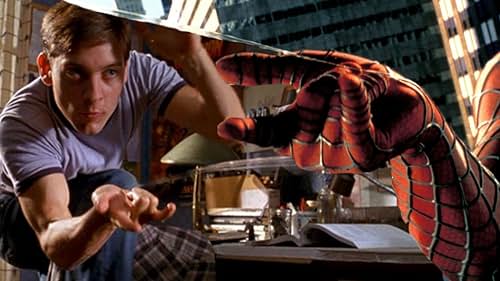
Tobey Maguire’s Spider-Man, directed by Sam Raimi, broke from comic book tradition by giving the hero organic web-shooters as a biological function of his spider-powers. This creative decision was controversial among fans who had grown accustomed to the mechanical web-shooters from the original comics. The organic approach aimed to add realism to the film adaptation, making Maguire’s version distinct from other Spider-Man iterations. As David Miller from IMDb notes, “This creative choice by director Sam Raimi was intended to add realism to the film adaptation, making Maguire’s version distinct from other Spider-Man iterations.”
In contrast, both Andrew Garfield’s and Tom Holland’s Spider-Man versions restored the mechanical web-shooters as seen in the original comics. When the three Spider-Men met in “Spider-Man: No Way Home,” the difference became a central plot point, with Holland and Garfield’s characters expressing confusion about Maguire’s organic web-shooting ability. This humorous moment highlighted the key differences between these approaches across the cinematic multiverse.
How Organic Web-Shooters Work in Early Spider-Man Films
In Sam Raimi’s original trilogy, Tobey Maguire’s Spider-Man possessed organic web-shooters as a natural extension of his spider-powers. This meant that Peter Parker’s body produced webbing internally through specialized glands located in his wrists, similar to how spiders produce silk. The organic webbing was portrayed as a biological function rather than a technological invention, which fundamentally changed how Peter interacted with his abilities.
What made this approach unique was how it streamlined the narrative. Unlike mechanical web-shooters that required Peter to invent, manufacture, and constantly maintain his web-fluid, the organic version allowed the character to focus more on his superheroics and less on the logistics of his equipment. As Damion Damaske from CBR explains, “This approach emphasizes the biological nature of Spider-Man’s powers and reduces the need for exposition about web-fluid, creating a more streamlined narrative that fits the realistic approach of the Sam Raimi Spider-Man movies.”
The organic webbing was portrayed as significantly stronger and more durable than artificial web-fluid because it was a natural biological product. In combat situations, this provided a constant, reliable source of webbing that didn’t require maintenance or refilling—critical when Spider-Man needed to swing through city blocks or restrain villains during high-stakes encounters.
The Mechanics of Mechanical Web-Shooters in Later Adaptations
Later Spider-Man adaptations returned to the comic book tradition of mechanical web-shooters, but with distinct differences between Andrew Garfield’s and Tom Holland’s versions. Both required technological intervention rather than biological production, but the specific implementations varied significantly.
Garfield’s Spider-Man in “The Amazing Spider-Man” films developed his web-shooters by reverse-engineering web-fluid from a bio-cable mixture made in Oscorp Industries. This approach emphasized Peter Parker’s scientific genius while establishing a more complex relationship with his powers—rather than having them naturally, he had to create them, adding a layer of responsibility and ownership to his abilities.
Tom Holland’s Spider-Man, appearing in the Marvel Cinematic Universe, had his web-shooters designed by Tony Stark with advanced Stark Industries technology. This version introduced additional features like web cartridges with limited capacity, automatic targeting, and various web modes (impact, trip line, etc.). As Nicholas Brooks from CBR notes, “Tobey Maguire’s Spider-Man had organic web-shooters as a biological function of his spider-powers, while Andrew Garfield’s version reverse-engineered web-fluid from a bio-cable mixture made in Oscorp Industries, and Tom Holland’s web-shooters were designed by Tony Stark with Stark Industries technology.”
The mechanical approach allowed for more dramatic tension—when Peter ran out of web-fluid, he was literally powerless until he could replenish his supply. This limitation added stakes to action sequences and showcased the character’s ingenuity in improvising solutions when his technology failed.
Web Material Composition and Disposal Across Spider-Man Storylines
The handling of web material after use represents another significant difference between organic and mechanical web-shooting approaches, with each storyline offering different solutions to the practical question of what happens to all that webbing once Spider-Man finishes using it.
In the organic web-shooting scenario from Raimi’s films, the web material naturally dissolves over time. This biological approach to disposal meant that New York City wasn’t constantly covered in layers of undissolved webbing—Peter’s body produced a substance that would break down naturally, much like real spider silk. This practical solution eliminated the need for elaborate cleanup procedures while maintaining narrative consistency with the biological nature of his powers.
Mechanical web-shooters presented a different challenge. Garfield’s web-fluid, developed from Oscorp bio-cable technology, was portrayed as more persistent and requiring specific conditions to degrade. The films didn’t explicitly address how this material was disposed of, but the implication was that it would eventually break down through natural processes.
Holland’s web-shooters featured web-fluid that was explicitly designed by Tony Stark with specific degradation properties. While not extensively detailed in the films, this approach suggested a more controlled disposal method, where the advanced technology ensured the material wouldn’t create long-term environmental issues. The focus remained on Spider-Man’s immediate needs rather than the long-term consequences of his webbing.
Interestingly, “Spider-Man: Into the Spider-Verse” introduced a unique solution—Miles Morales’ venom blast could neutralize webbing, suggesting a method to rapidly deactivate and dispose of it when needed. This creative approach added another dimension to the web-shooting mythology while addressing practical concerns about material cleanup.
Comparing the Practicality of Organic vs. Mechanical Web-Shooters
The debate between organic and mechanical web-shooters extends beyond narrative preferences to practical considerations about which approach offers more advantages for a superhero swinging through New York City’s skyscrapers.
Organic web-shooters provide several compelling advantages. They’re much easier to conceal, especially when Spider-Man is wearing his suit—no external devices or cartridges to worry about. The constant availability of webbing means Peter never has to worry about running out during critical moments, and there’s no maintenance required for complex mechanical systems. As Damion Damaske from CBR points out, “Organic web-shooters are much easier to conceal, especially when Spider-Man is wearing his suit. The organic webbing produced is significantly stronger and more durable than mechanical web-fluid because it’s a natural biological function rather than artificial.”
Mechanical web-shooters, however, offer their own benefits. They showcase Peter Parker’s scientific genius and problem-solving abilities, making his superhero identity more connected to his intellect rather than just his physical powers. The limitation of finite web-fluid creates natural tension and opportunities for creative problem-solving when Peter runs out at inopportune moments. Additionally, mechanical web-shooters allow for customization—different web patterns, strengths, and specialized applications that might not be possible with biological production.
From a practical standpoint, organic web-shooters eliminate the need for Peter to constantly carry and maintain equipment, making his superhero life more streamlined. Mechanical web-shooters, while requiring more preparation, offer greater versatility and control over his webbing capabilities. The choice between them ultimately comes down to whether you want to emphasize Spider-Man’s biological nature or his scientific ingenuity—a debate that continues to divide fans and filmmakers alike.
Sources
- CBR - Organic vs. Mechanical Web-Shooters — Analysis of the advantages of organic web-shooters in Spider-Man films: https://www.cbr.com/spiderman-organic-vs-mechanical-web-shooters/
- CBR - No Way Home Web-Shooter Debate — Comparison of different web-shooter approaches in Spider-Man: No Way Home: https://www.cbr.com/spider-man-3-organic-vs-mechanical-web-shooter-debate/
- IMDb - Spider-Man Organic Web-Shooters — Details on how Tobey Maguire’s Spider-Man featured organic web-shooters as a departure from comics: https://www.imdb.com/news/ni63882868/
Conclusion
The evolution of Spider-Man’s web-shooting abilities from organic to mechanical represents more than just a technical change—it reflects different creative approaches to the character across film adaptations. Tobey Maguire’s organic web-shooters emphasized the biological nature of his powers while streamlining the narrative, while later versions returned to mechanical web-shooters to showcase Peter Parker’s scientific genius. Web material disposal varies accordingly, with organic webbing naturally dissolving over time while mechanical web-fluid requires more complex handling. Each approach offers unique advantages—organic webbing provides constant availability and easier concealment, while mechanical shooters offer greater versatility and connection to Peter’s intellect. The ongoing debate between these methods highlights how even the smallest details in superhero storytelling can spark passionate discussions among fans about what makes Spider-Man truly special.

While controversial among fans, there are many reasons why Spider-Man’s organic web-shooters are truly superior to mechanical web-shooters. Organic web-shooters are much easier to conceal, especially when Spider-Man is wearing his suit. The organic webbing produced is significantly stronger and more durable than mechanical web-fluid because it’s a natural biological function rather than artificial. In combat situations, organic web-shooters provide a constant, reliable source of webbing that doesn’t require maintenance or refilling. This approach emphasizes the biological nature of Spider-Man’s powers and reduces the need for exposition about web-fluid, creating a more streamlined narrative that fits the realistic approach of the Sam Raimi Spider-Man movies.

Spider-Man: No Way Home highlights the key differences between organic and mechanical web-shooters when the three Spider-Men meet. Tobey Maguire’s Spider-Man had organic web-shooters as a biological function of his spider-powers, while Andrew Garfield’s version reverse-engineered web-fluid from a bio-cable mixture made in Oscorp Industries, and Tom Holland’s web-shooters were designed by Tony Stark with Stark Industries technology. The mechanical web-shooters require the web-fluid to be recreated whenever they run out, unlike the constant availability of organic webbing. The film doesn’t settle the debate, as each approach has its merits - organic web-shooters provide constant availability and emphasize biological powers, while mechanical ones showcase Peter’s scientific abilities.
Tobey Maguire’s Spider-Man featured organic web-shooters as a significant departure from comic book source material, where Spider-Man traditionally used mechanical web-shooters. This creative choice by director Sam Raimi was intended to add realism to the film adaptation, making Maguire’s version distinct from other Spider-Man iterations. In contrast, both Andrew Garfield’s and Tom Holland’s Spider-Man versions restored the mechanical web-shooters as seen in the original comics. When the three Spider-Men met in “Spider-Man: No Way Home,” Holland and Garfield’s characters expressed confusion about Maguire’s organic web-shooting ability, creating a humorous moment that highlighted this key difference between film versions.


