Logical Inconsistencies in Arguments About Islam's Spread: Historical Analysis
Examining historical evidence that refutes claims Islam spread primarily through conquest and doesn't belong in the West. Analysis of religious spread patterns and cultural integration.
What are the logical inconsistencies in arguments that claim Islam spread primarily through violent conquest and doesn’t belong in the West? How do these arguments compare to similar claims about other religions, and what historical evidence supports or refutes these claims?
Arguments claiming Islam spread primarily through violent conquest contain significant logical inconsistencies when examined against historical evidence. The assertion that Islam doesn’t belong in the West ignores centuries of Muslim presence and cultural contributions to European civilization, creating a selective historical narrative that doesn’t account for the complex, multi-faceted nature of religious expansion across different regions and time periods.
Contents
- The Historical Context of Islam’s Spread
- Methods of Islamic Expansion: Beyond the “Sword” Narrative
- Islam in Europe: Historical Presence and Cultural Integration
- Comparative Analysis: Islam vs. Other Religions’ Spread
- Logical Inconsistencies in Arguments Against Islam in the West
- Historical Evidence Supporting Peaceful Coexistence and Cultural Exchange
The Historical Context of Islam’s Spread
Understanding the история ислама (history of Islam) requires examining the conditions of 7th century Arabia and the surrounding regions. The initial period of Islamic expansion occurred during a time when the Byzantine and Sassanian Persian empires had exhausted themselves through decades of warfare, creating a power vacuum that the emerging Islamic state was able to fill. This historical context is crucial for evaluating claims about Islam’s spread.
The early Muslim armies, while strategically successful, were relatively small in number—typically ranging from 10,000 to 20,000 fighters according to historical records. These forces were insufficient to impose mass conversion on vast populations across Egypt, Syria, Iraq, and Iran through coercion alone. The timeline of conquest versus conversion reveals a critical distinction: rapid military victories took place within decades, yet the demographic shift to Muslim-majority populations occurred gradually over centuries.
Treaties established during this period, such as the accord between Caliph Umar and the Patriarch of Jerusalem, explicitly protected non-Muslim communities and prohibited forced conversion. This structured approach to religious coexistence contradicts the simplistic narrative of violent religious imposition. The historical record shows that the majority of the central Middle East became Muslim only by the 10th century, approximately 300 years after the initial conquests, suggesting a process far more complex than forced conversion.
Methods of Islamic Expansion: Beyond the “Sword” Narrative
The распространение ислама (spread of Islam) occurred through multiple channels that extended well beyond military campaigns. While military conquests were dramatic and captured historical imagination, they represented only one aspect of a complex process of cultural and religious diffusion.
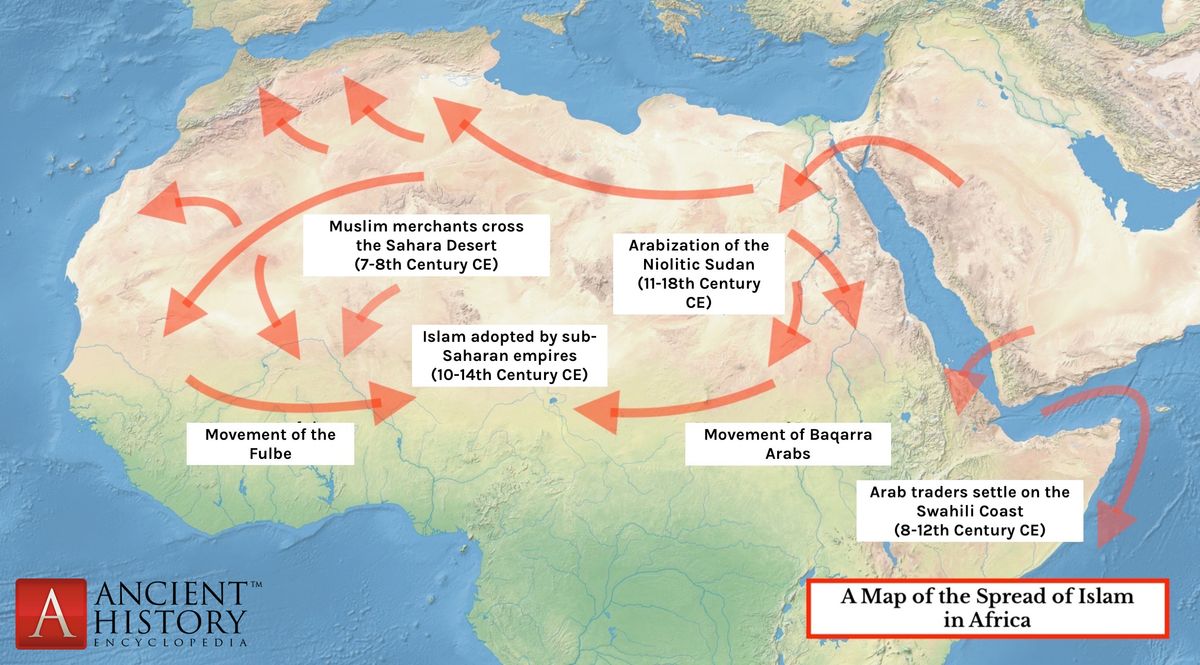
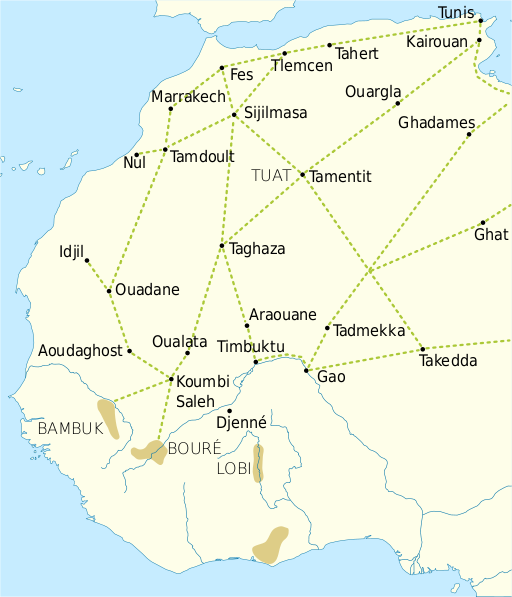
Trade networks served as primary conduits for Islamic teachings across Africa and Asia. The trans-Saharan trade routes connected West Africa with North Africa and the Mediterranean world, facilitating not only the exchange of goods but also ideas, religious practices, and scholarly knowledge. These trade routes became arteries along which Islamic faith spread peacefully through merchant communities and interactions with local populations.
Similarly, in Central Asia during the 9th and 10th centuries, Islamization occurred primarily through participation in the Silk Road trade. The rise of Islamic kingdoms like the Samanid Empire, followed by the conversion of Turkic dynasties including the Karakhanids, Ghaznavids, and Seljuks, demonstrates how economic integration preceded and facilitated religious conversion.
The fiscal structure of early Islamic states actually discouraged mass conversion. Non-Muslims “People of the Book” (Jews and Christians) were required to pay a protection tax (jizya) and land tax (kharaj), while Muslims were exempt from these obligations. This created economic disincentives for conversion, as converting would mean losing the tax revenue that supported the state apparatus. Historical evidence suggests that rulers often preferred to maintain the tax base of non-Muslim populations rather than risk losing it through mass conversion.
Islam in Europe: Historical Presence and Cultural Integration
The claim that “ислам в европе” (Islam in Europe) is a recent phenomenon contradicts centuries of historical reality. Muslim presence in Europe predates the emergence of many modern European nations and has contributed significantly to European civilization.
Al-Andalus (Islamic Spain) represents one of the most extensive and prolonged periods of Muslim rule in Western Europe, lasting from 711 to 1492. During this period, Islamic civilization in Iberia produced remarkable advancements in science, philosophy, medicine, and architecture that profoundly influenced European development. Cities like Cordoba and Toledo became major centers of learning where Islamic, Jewish, and Christian scholars preserved and expanded classical knowledge.
Sicily experienced similar Islamic rule from the 9th to 11th centuries, leaving an enduring cultural legacy. The Ottoman Empire’s expansion into Southeastern Europe beginning in the 14th century established Muslim communities that have remained integral parts of European societies for centuries. These historical realities demonstrate that Islam has been part of the European landscape for over a millennium.
The Great Mosque of Cordoba, now a Cathedral, stands as a physical testament to the cultural integration that occurred during periods of Muslim rule in Europe. Such architectural transformations—where mosques were later converted to churches or vice versa—reflect the complex layers of religious history in Europe rather than a simple binary of civilizations.
Comparative Analysis: Islam vs. Other Religions’ Spread
Arguments that isolate Islam as uniquely spread through violence become particularly problematic when compared to the распространение христианства (spread of Christianity) and other major religions. Christianity, often portrayed as spread through peaceful means, actually expanded through multiple channels including Roman military administration, political alliances, and imperial decrees.
The Christianization of the Roman Empire involved imperial power structures, with Constantine’s conversion and subsequent establishment of Christianity as the state religion creating institutional pathways for religious expansion. Similar patterns occurred with the Christianization of various European peoples through royal conversions and state sponsorship.
The spread of Buddhism occurred through multiple mechanisms including royal patronage, trade networks, and missionary activities. Buddhism’s expansion into Central Asia and East Asia followed trade routes similar to those that facilitated Islamic spread, demonstrating that religious diffusion typically involves multiple, interconnected factors rather than a single method.
Islam’s expansion actually shares more similarities with these other religious traditions than differences. All major religions have spread through combinations of military activity, trade networks, missionary work, political alliances, and cultural appeal. The selective focus on Islam’s military aspects while ignoring similar elements in other religious histories creates an inconsistent comparative framework.
Logical Inconsistencies in Arguments Against Islam in the West
Arguments claiming Islam doesn’t belong in the West contain several logical inconsistencies when examined historically and comparatively. These arguments often rely on selective historical narratives that ignore contextual factors while applying different standards to Islam than to other religions.
One significant inconsistency is the temporal disconnect between argument and evidence. Critics point to early Islamic conquests as evidence of an inherently violent religion, yet fail to apply the same historical distance to other religious traditions. Using the same logic, one could argue that Christianity doesn’t belong in the Americas due to the Spanish conquests, or that Judaism doesn’t belong in Europe due to the Roman destruction of the Temple.
The “clash of civilizations” narrative also contains logical flaws. Islam has been part of European civilization for over a millennium, contributing to its development in science, philosophy, mathematics, and the arts. The notion that Islam represents an external threat to Western civilization ignores the historical reality of Islam’s integral role in shaping Western thought and culture.
Arguments based on religious texts taken out of context represent another logical inconsistency. The Quran contains both peaceful exhortations and verses related to conflict, similar to the Bible. Selective citation without considering historical context, interpretive traditions, or the concept of abrogation within Islamic theology creates a distorted understanding.
The financial incentives mentioned earlier create a practical contradiction to the forced conversion narrative. If the goal was simply to expand the Muslim population, the fiscal system would have encouraged rather than discouraged conversion through the jizya and kharaj taxes.
Historical Evidence Supporting Peaceful Coexistence and Cultural Exchange
Multiple historical sources provide compelling evidence of peaceful coexistence and cultural exchange during periods of Islamic rule. The Quranic principle of “no compulsion in religion” (2:256) was not merely theoretical but was implemented through various legal and social structures.
The millet system in Ottoman Empire allowed religious communities significant autonomy in managing their own affairs, including religious education, marriage laws, and internal disputes. This system preserved religious diversity while maintaining social cohesion—a model that contradicts narratives of forced conversion.

In Africa, the peaceful spread of Islam is particularly well-documented. The Great Mosque of Kilwa on the Swahili Coast and the Sankore Mosque in Timbuktu represent centers of Islamic learning that developed through trade and scholarly exchange rather than conquest. These institutions became hubs for the transmission of knowledge across cultural and religious boundaries.
Historical records from Muslim chroniclers themselves distinguish between political/military expansion and religious conversion. While military victories were celebrated and documented, the gradual process of demographic change occurred through social, economic, and cultural factors that are less dramatic but equally important.
The preservation and translation of classical Greek, Persian, and Indian texts by Muslim scholars during the Islamic Golden Age represents another form of cultural exchange. This intellectual tradition preserved knowledge that might have been lost and later transmitted it to European scholars, contributing significantly to the Renaissance.
The coexistence of multiple religious communities in cities like Cordoba, Baghdad, and Istanbul for centuries provides tangible evidence that periods of Islamic rule facilitated religious diversity rather than its suppression. The architectural landscape of these cities, with mosques, churches, synagogues, and temples existing in close proximity, visually demonstrates the reality of religious coexistence.
Conclusion
The arguments claiming Islam spread primarily through violent conquest and doesn’t belong in the West contain significant logical inconsistencies when examined against historical evidence. The история ислама (history of Islam) reveals a complex process of expansion involving multiple channels beyond military conquest, including trade networks, scholarly exchange, and political alliances. The распространение ислама (spread of Islam) occurred through gradual, multifaceted processes that extended over centuries rather than through instantaneous forced conversion.
Comparative analysis demonstrates that Islam’s expansion shares more similarities with other religious traditions than differences. The selective application of historical standards—focusing on Islam’s military aspects while ignoring similar elements in the spread of Christianity, Buddhism, or other religions—creates an inconsistent analytical framework. The historical reality of “ислам в европе” (Islam in Europe) spans over a millennium, with Muslim communities contributing significantly to European civilization in science, philosophy, and the arts.
The arguments against Islam’s place in the West overlook the historical evidence of peaceful coexistence and cultural exchange. The Quranic principle of “no compulsion in religion” was implemented through legal systems like the millet system, which preserved religious diversity while maintaining social cohesion. Historical sources—including Muslim chroniclers themselves—distinguish between political/military expansion and religious conversion, revealing a process far more complex than forced conversion narratives suggest.
Ultimately, understanding Islam’s spread requires rejecting simplistic narratives that reduce complex historical processes to single causes. The evidence demonstrates that Islam expanded through multiple interconnected factors—military, economic, cultural, and social—similar to other major religious traditions. Recognizing this complexity allows for a more accurate understanding of both history and the contemporary presence of Islam in Western societies.
Sources
-
Yale University Historical Analysis — Academic examination of historical evidence of Islam’s spread: https://rps.macmillan.yale.edu/sites/default/files/files/kennedy.pdf
-
World History Encyclopedia — Historical information on Islam’s spread in Africa through trade networks: https://www.worldhistory.org/article/1382/the-spread-of-islam-in-ancient-africa/
-
Reddit AskHistorians — Community discussion with historians examining records of Muslim practices and conversion: https://www.reddit.com/r/AskHistorians/comments/4viyf5/did_islam_spread_mainly_through_warfare_and/
-
LOUIS Western Civilization — Textbook on Western civilization covering Islam’s expansion and integration: https://louis.pressbooks.pub/westernciv/chapter/chapter11/
-
Islamonweb — Islamic website addressing historical misconceptions about Islam’s spread: https://en.islamonweb.net/did-islam-spread-by-the-sword
-
PubMed Central - Academic research on trade routes and Islamization in Central Asia: https://pmc.ncbi.nlm.nih.gov/articles/PMC8046173/
-
ScienceDirect - Research article on the timeline between conquest and conversion in Muslim territories: https://www.sciencedirect.com/science/article/abs/pii/S0014498321000188
The claim that Islam spread primarily by the sword is logically inconsistent because the Quran contains both peaceful exhortations and violent directives, but the latter are limited to non-believers who refuse to pay jizya, not to compel conversion. Early Muslim armies were too small (10-20,000) to force mass conversion of vast populations in Egypt, Syria, Iraq, and Iran. Treaties such as Umar’s accord with the Patriarch of Jerusalem protected non-Muslims and forbade forced conversion. Fiscal incentives—jizya and kharaj—made conversion costly, so the state actually discouraged mass conversion. Historical evidence shows that most conversions occurred gradually over centuries, with the majority of the central Middle East becoming Muslim only by the 10th century.

The claim that Islam spread primarily through violent conquest is inconsistent with evidence that trade, merchants, scholars, and missionaries were the main drivers of spread in Africa, as shown by trans-Saharan trade routes. The assertion that Islam does not belong in the West ignores the long history of Muslim presence in Europe, such as Al-Andalus, Sicily, and the Ottoman Empire, and the fact that Islam has been integrated into Western societies for centuries. Christianity also spread through trade and missionary work in Africa, not solely through conquest, and Islam similarly spread peacefully along the Swahili Coast, as illustrated by the Great Mosque of Kilwa.

Historical records show that while there were military campaigns, the narrative of forced conversion is oversimplified. Muslim historians did document military actions, but these were primarily about political control rather than religious conversion. The idea that ‘infidels were forced to convert or die’ ignores the protected status of ‘People of the Book’ (Jews and Christians) who were allowed to practice their religions by paying a protection tax (jizya). This system allowed religious communities to coexist under Muslim rule.
Islam’s expansion in the 7th-8th centuries was driven by rapid military campaigns—Persia fell in 637 and Egypt by 642—yet subsequent Umayyad and Abbasid policies of religious tolerance and robust trade networks turned conquests into foundations for cultural and economic exchange. Similar narratives about Christianity—claiming it spread only through Roman conquest—are equally misleading, because Christianity also spread through trade, missionary work, and cultural assimilation. The enduring presence of Islam in Western Europe demonstrates that Islam is an integral part of Western civilization and cannot be reduced to violence alone.
The arguments made by some political and historical ‘pundits’ about Islamic belief spreading violently and through warfare clearly have no historical basis. Muslim religious toleration has influenced historical traditions. This perspective challenges the oversimplified notion that Islam expanded solely through conquest. While military victories extended Muslim political control, conversion was largely driven by social, economic, and cultural factors. The idea that Islam spread by the sword gained traction during the Crusades and was later reinforced through European colonialism and Orientalist scholarship.
The 9th century saw the rise of Islamic kingdoms in Central Asia, especially the Samanid Empire, the first Persian dynasty after the Arab conquests. The Islamization of the nomadic Turkic peoples of Central and Inner Asia occurred during the 10th century along the trade routes. This process has been linked mainly to their participation in the oasis-based Silk Road trade and was accelerated by the conversion and expansion of three Turkic Muslim dynasties of the Karakhanids, the Ghaznavids, and the Seljuks. Trade routes, not military conquest, were the primary vehicles for Islam’s spread in this region.

Research corroborates that while conquest was dramatic and rapid, taking a couple of decades, conversion was much slower, taking three centuries before Muslims came to predominate in conquered territories. This timeline demonstrates a clear distinction between political/military expansion and religious conversion. The evidence suggests that initial conquests created conditions under which voluntary conversion could occur over time, rather than immediate mass conversion being forced upon populations.


