Causes of Feeling Lost in Life & Finding Purpose
Explore common causes of feeling lost in life including transitions, mental health issues, stress, and disconnection. Discover neuroscience-backed strategies to develop purpose, self-awareness, meaningful connections, and sustainable direction for fulfillment.
What are the common causes of feeling lost in life, and how can one develop a sense of purpose and direction?
Feeling lost in life is a common human experience that stems from various psychological, neurological, and environmental factors. Developing a sense of purpose requires understanding these root causes and implementing intentional strategies to reconnect with your core values and direction. Many people struggle with finding meaning in their lives, but this journey of self-discovery can lead to profound personal growth and fulfillment.

Contents
- Understanding the Feeling of Being Lost in Life
- Common Causes of Feeling Lost and Lack of Purpose
- The Neuroscience Behind Feeling Lost and Finding Purpose
- Developing Self-Awareness to Rediscover Your Path
- Practical Strategies to Find Your Purpose and Direction
- Building Meaningful Connections and Community
- Overcoming Mental Health Barriers to Finding Purpose
- Creating Sustainable Purpose in Your Daily Life
- Sources
- Conclusion
Understanding the Feeling of Being Lost in Life
The sensation of feeling lost in life often manifests as a disorienting sense of uncertainty about your direction, values, or goals. This profound existential confusion can make you question everything from your career choices to your relationships and your very purpose in the world. Many people experience this feeling at various life transitions—graduating from college, changing careers, entering midlife, or experiencing significant loss.
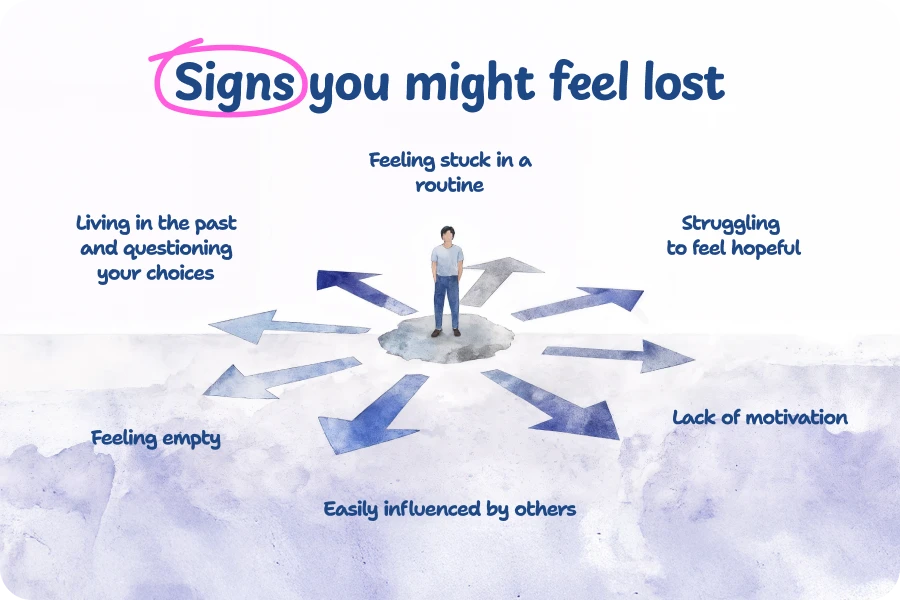
Feeling lost typically involves a disconnect between your current reality and where you believe you should be. This gap creates a state of limbo where you’re neither satisfied with your present nor clear about your future. The experience often includes symptoms like low motivation, difficulty making decisions, comparing yourself unfavorably to others, and a persistent sense that something important is missing from your life.
What’s particularly challenging about this state is how it affects your daily functioning. Simple decisions become overwhelming, progress stalls, and even enjoyable activities may lose their appeal. The feeling of being lost can be incredibly isolating, making you believe you’re the only one struggling with these questions when in reality, it’s a universal human experience that many people quietly navigate throughout their lives.
Common Causes of Feeling Lost and Lack of Purpose
Several underlying factors contribute to the feeling of being lost in life. Understanding these root causes is essential for developing effective strategies to rediscover your sense of direction and purpose.
Major Life Transitions
Significant life changes often trigger feelings of disorientation and uncertainty. Whether it’s graduating from college, changing careers, ending a relationship, moving to a new city, or experiencing empty nest syndrome, these transitions disrupt your established routines and identity. When the familiar structures that gave your life meaning disappear, it’s natural to feel adrift until you establish new foundations.
Mental Health Conditions
Various mental health issues can significantly impact your ability to find purpose and direction. Depression often drains motivation and makes even small tasks feel overwhelming. Anxiety creates excessive worry about the future and leads to decision paralysis. Other conditions like PTSD, substance use disorders, and adjustment disorders can all erode your sense of self and purpose. It’s crucial to recognize when these conditions may be contributing to your feelings of being lost.
Societal and Cultural Pressures
Modern society bombards us with conflicting messages about success and happiness. Social media amplifies the tendency to compare our behind-the-scenes reality to everyone’s highlight reel. Cultural expectations about what constitutes a “successful life”—whether it’s wealth, status, family achievements, or career milestones—may not align with your authentic values. This misalignment between external expectations and internal values creates a profound sense of disorientation.
Lack of Self-Awareness
Many people struggle with a genuine understanding of their core values, strengths, and passions. Without this self-knowledge, it’s challenging to set meaningful goals or make decisions that align with your authentic self. This lack of self-awareness often stems from years of prioritizing others’ needs over your own or suppressing your true desires to meet external expectations.
Chronic Stress and Burnout
When you’re constantly operating in a state of stress or burnout, your brain’s capacity for creative thinking and long-term planning diminishes. The constant fight-or-flight response narrows your focus to immediate survival needs, making it difficult to envision or work toward future goals. This creates a vicious cycle where burnout leads to feeling lost, which in turn increases stress and anxiety.

Disconnection and Isolation
Human beings are inherently social creatures who thrive on connection. When you feel disconnected from others—from your community, friends, family, or even humanity at large—it becomes incredibly difficult to find meaning and purpose. This disconnection can be physical (living far from loved ones) or emotional (feeling misunderstood or alone in a crowd).
Past Trauma and Negative Experiences
Unresolved trauma or significant negative life experiences can create deep-seated beliefs that limit your sense of possibility. These experiences may lead you to believe that you’re unworthy of happiness or that pursuing your dreams is futile. Trauma can also disrupt your sense of safety and trust in the world, making it difficult to take risks or envision a positive future.
The Neuroscience Behind Feeling Lost and Finding Purpose
Recent neuroscience research provides fascinating insights into why we feel lost and how purpose affects our brain function. Understanding these biological mechanisms can help you develop more effective strategies for finding your direction.
The Prefrontal Cortex and Decision-Making
When you’re feeling lost, your prefrontal cortex—the brain region responsible for executive functions like planning, decision-making, and goal-setting—often shows reduced activity. This neurological state makes it incredibly difficult to make choices, plan for the future, or maintain focus on long-term objectives. The good news is that this is not permanent; through intentional practice and new experiences, you can reactivate and strengthen these neural pathways.
The SEEKING System and Motivation
Neuroscientists have identified the SEEKING system, a fundamental brain network that drives curiosity, exploration, and motivation. When you’re feeling lost, this system becomes less active, creating a feedback loop where reduced motivation leads to fewer exploratory behaviors, which in turn further diminishes your sense of purpose and direction. Dr. Sydney Ceruto explains that this is why depression often manifests as both feeling lost and lacking motivation.
Dopamine and Reward Processing
Purpose and meaning activate the brain’s reward system, particularly the dopamine pathways. When you engage in activities that align with your values and provide a sense of purpose, your brain releases dopamine, creating feelings of satisfaction and motivation. This is why purposeful activities often feel intrinsically rewarding—they literally light up your brain’s reward circuitry.
Neural Plasticity and New Pathways
The brain possesses remarkable plasticity, meaning it can reorganize itself by forming new neural connections throughout life. When you intentionally engage in activities that help you find purpose, you’re literally rewiring your brain to support new thought patterns and behaviors. This neuroplasticity is the biological foundation behind practices like mindfulness, journaling, and therapy—they help create new neural pathways that support a more purposeful life.
The Default Mode Network and Self-Reflection
The default mode network (DMN) becomes active when you’re engaged in self-referential thinking and mind-wandering. While the DMN is essential for self-reflection, excessive activity in this network is associated with rumination and negative thought patterns that contribute to feeling lost. Mindfulness practices have been shown to help regulate DMN activity, reducing unhelpful rumination while maintaining healthy self-reflection.
The Role of Stress Hormones
Chronic feelings of being lost often correlate with elevated stress hormones like cortisol. These hormones can impair cognitive function, particularly affecting the prefrontal cortex and hippocampus—brain regions critical for memory, learning, and executive function. This creates another vicious cycle where stress impairs your ability to think clearly and make decisions, which in turn increases feelings of being lost and overwhelmed.
Developing Self-Awareness to Rediscover Your Path
Self-awareness serves as the foundation for finding purpose and direction. Without understanding your core values, strengths, and desires, it’s nearly impossible to create a meaningful life path that resonates with your authentic self.
Exploring Your Personality and Emotional Awareness
Start by exploring your personality and emotional awareness through structured self-discovery tools. Personality assessments like the Myers-Briggs Type Indicator, the Enneagram, or the Big Five can provide valuable insights into your natural tendencies, strengths, and potential growth areas. These frameworks help you understand how you process information, make decisions, and interact with the world.
Equally important is developing emotional awareness—the ability to recognize, understand, and manage your emotions. Practice naming your emotions throughout the day without judgment. Instead of saying “I’m stressed,” try to identify the specific emotions underneath: “I’m feeling anxious about the presentation, frustrated by the lack of preparation, and disappointed in myself for procrastinating.” This nuanced understanding helps you respond more effectively to your emotional needs.
Reflective Journaling Practices
Journaling provides a powerful tool for developing self-awareness and processing your thoughts and feelings. Try different approaches to find what works best for you:
Morning Pages: Write three pages of stream-of-consciousness writing every morning to clear your mind and access your deeper thoughts.
Gratitude Journaling: Regularly noting things you’re grateful for helps shift your focus from lack to abundance and builds resilience.
Values Clarification: Journal about times when you felt most alive, proud, or fulfilled. Identify the underlying values that were expressed in those moments.
Decision Journaling: When facing important decisions, document your reasoning, the factors you considered, and how you felt about each option. Reviewing these entries later reveals patterns in your decision-making process.
Mindfulness and Present-Moment Awareness
Mindfulness practices train your brain to focus on the present moment without judgment, reducing rumination about the past or future. This heightened awareness helps you recognize when you’re drifting into unhelpful thought patterns about feeling lost.
Start with simple mindfulness exercises: focus on your breath for just five minutes daily, pay attention to the sensory details of routine activities like eating or walking, or use guided meditation apps. Over time, these practices help you develop greater clarity about your thoughts, feelings, and values.
Identifying Core Values
Your core values represent what’s most important to you at your deepest level. They serve as your internal compass for making decisions and finding purpose. To identify your core values:
- Brainstorm a comprehensive list of values (integrity, creativity, connection, growth, security, adventure, etc.)
- Narrow this list to your top 10-15 values
- Reflect on which values feel most essential to who you are
- Consider how these values show up (or don’t) in different areas of your life
- Notice which values you’re honoring and which you’re neglecting
Values aren’t static—they may evolve as you grow and experience life. Regular reflection ensures your actions remain aligned with your current values.
Exploring Your Strengths and Passions
Understanding your natural talents and interests provides clues to your potential purpose. Consider these questions:
- What activities make you lose track of time?
- What topics or subjects naturally fascinate you?
- What do friends or colleagues consistently ask for help with?
- What challenges have you overcome that revealed your strengths?
- What work or activities have given you the greatest sense of satisfaction?
Strengths assessments like the CliftonStrengths or VIA Character Strengths can provide structured insights into your unique capabilities. Remember that strengths aren’t just skills—they include personality traits, thinking styles, and ways of relating to others that come naturally to you.
Practicing Self-Compassion
The journey of self-awareness requires self-compassion—treating yourself with kindness and understanding rather than harsh judgment. When exploring your thoughts and feelings, especially those related to feeling lost, approach yourself with the same compassion you’d offer a close friend.
Self-compassion practices include:
- Acknowledging difficult emotions without trying to fix them immediately
- Recognizing that feeling lost is a normal human experience
- Challenging your inner critic with realistic, supportive self-talk
- Celebrating small wins and progress rather than focusing on perfection
- Seeking support when needed rather than isolating yourself
Practical Strategies to Find Your Purpose and Direction
Once you’ve developed greater self-awareness, you can implement practical strategies to actively cultivate purpose and direction in your life. These evidence-based approaches help translate insights into meaningful action.
Setting SMART Goals
SMART goals provide a clear framework for turning your desire for purpose into actionable steps. This approach ensures your goals are:
Specific: Clearly define what you want to achieve. Instead of “I want to find purpose,” try “I want to volunteer regularly at the animal shelter to connect with my love for animals.”
Measurable: Include concrete criteria for tracking progress. How will you know when you’re closer to your goal?
Achievable: Set goals that stretch you but remain realistic given your current resources and circumstances.
Relevant: Ensure your goals align with your core values and what truly matters to you.
Time-bound: Set deadlines to create urgency and structure.
For example, rather than a vague goal like “be more creative,” a SMART goal might be: “Complete an online photography course and take at least 50 photos each week for the next three months to explore my creative side.”
Experimentation and New Experiences
Purpose often emerges through exploration rather than introspection alone. Try new activities, visit new places, learn new skills, and meet new people. These experiments help you discover what resonates with you without the pressure of making permanent commitments.
Consider approaching experimentation with a playful mindset—view each new experience as data collection rather than a test of your worth or potential. Keep track of what energizes you versus what drains you. Over time, patterns emerge that reveal your interests, strengths, sources of meaning, and potential directions.
Creating a Personal Mission Statement
A personal mission statement captures your core purpose and values in a concise, inspiring statement. This serves as a North Star for decision-making and goal-setting. To create yours:
- Reflect on your values, strengths, passions, and what you want to contribute to the world
- Write a draft that captures your essence and purpose
- Refine it until it feels authentic and energizing
- Place it where you’ll see it regularly
- Review and update it periodically as you grow
Your mission statement might evolve from something like “To use my creativity and compassion to help others find their voice” to more specific directions as you explore different paths.
Building Daily Routines That Reflect Your Values
Small, consistent actions compound over time to create significant change. Design daily and weekly routines that align with your values and move you toward your goals. These might include:
- Morning rituals that set a positive tone for your day
- Learning or skill-building time
- Physical activity that energizes both body and mind
- Connection time with meaningful relationships
- Reflection time to assess progress and adjust course
The key is consistency rather than intensity—small, meaningful actions performed regularly create more lasting change than occasional grand gestures.
Practicing Gratitude and Abundance Mindset
Gratitude shifts your focus from what’s missing to what’s present, creating a foundation for purpose and meaning. Daily gratitude practices help rewire your brain to notice and appreciate the positive aspects of your life, even during challenging times.
Try these approaches:
- Keep a gratitude journal with specific entries about what you’re thankful for
- Express appreciation directly to others who make a difference in your life
- Practice “noticing” gratitude throughout your day—savor small pleasures and positive experiences
- Create visual reminders of abundance (like a jar filled with notes about good things)
This abundance mindset helps you see opportunities and possibilities that might otherwise remain hidden when you’re focused on feeling lost or lacking.
Seeking Feedback and Different Perspectives
Sometimes we’re too close to our own situation to see our blind spots or recognize our strengths. Trusted friends, family members, mentors, or coaches can offer valuable perspectives on your talents, potential paths, and how you come across to others.
When seeking feedback, be specific about what you want to know rather than asking general questions. Instead of “What should I do with my life?” try “What strengths do you see in me that might guide my career choices?” or “How do you think I typically respond to challenges or uncertainty?”
Building Meaningful Connections and Community
Human connection serves as a powerful antidote to feeling lost in life. Meaningful relationships provide support, perspective, and opportunities for contribution—all essential elements of a purposeful existence.
The Importance of Social Connection
Research consistently shows that strong social connections correlate with greater life satisfaction, resilience, and longevity. When you’re feeling lost, isolating yourself may seem easier, but this approach often deepens the sense of disconnection and purposelessness.
Instead, actively seek out connections that feel authentic and supportive. This might involve reconnecting with old friends, joining new groups related to your interests, or being more vulnerable with existing relationships about your feelings of uncertainty.
Finding Your Tribe
“Finding your tribe” means discovering people who share your values, interests, and energy. These connections provide a sense of belonging and mutual understanding that helps counteract feelings of being lost or different. Look for communities where you can be your authentic self without pretense or performance.
Your tribe might include:
- Professional or hobby-related groups
- Volunteer organizations aligned with your values
- Support groups for shared experiences or challenges
- Online communities focused on your interests
- Religious or spiritual groups (if applicable to you)
Remember that quality matters more than quantity—a few deep, meaningful connections often provide more support than numerous superficial relationships.
Volunteering and Contribution
Contributing to something larger than yourself is one of the most powerful ways to find purpose. Volunteering allows you to:
- Use your strengths and skills to help others
- Connect with people who share your values
- Gain perspective on your own challenges
- Experience the satisfaction of making a difference
- Explore potential career paths or interests
Consider causes that align with your values—whether it’s helping animals, supporting education, environmental conservation, or assisting vulnerable populations. The specific cause matters less than finding work that feels meaningful to you.
Mentorship and Being Mentored
The mentorship relationship provides mutual benefits that can help counteract feelings of being lost. As a mentee, you gain guidance, perspective, and support from someone with more experience. As a mentor, you reinforce your own knowledge, develop leadership skills, and experience the satisfaction of helping others grow.
These relationships help you see yourself through others’ eyes, recognize your impact, and understand how your journey fits into broader patterns of human experience and development.
Creating Shared Meaning
Purpose often emerges through shared experiences and collaborative efforts. Consider projects or activities that create something meaningful with others:
- Starting a community garden
- Organizing local events or meetups
- Creating content or art with shared themes
- Collaborating on business ventures or social enterprises
- Working together on causes you care about
These shared endeavors provide connection, purpose, and the satisfaction of building something meaningful together.
Overcoming Mental Health Barriers to Finding Purpose
Mental health challenges can significantly impact your ability to find purpose and direction. When depression, anxiety, or other conditions cloud your thinking and drain your energy, even simple steps toward finding meaning can feel overwhelming.
Recognizing When Mental Health Is a Factor
It’s important to recognize when mental health conditions may be contributing to your feelings of being lost. Consider these red flags:
- Persistent low mood or anhedonia (loss of interest in activities you typically enjoy)
- Excessive worry or rumination that interferes with daily functioning
- Significant changes in sleep patterns or appetite
- Difficulty concentrating or making decisions
- Feelings of worthlessness or hopelessness
- Thoughts of self-harm or suicide
If you’re experiencing these symptoms, seeking professional help should be your priority before focusing on purpose development. Mental health treatment provides the foundation upon which purpose and meaning can be built.
Professional Support and Therapy
Therapy offers structured support for addressing the underlying factors that contribute to feeling lost. Different therapeutic approaches may be helpful:
Cognitive Behavioral Therapy (CBT): Helps identify and challenge negative thought patterns that contribute to feelings of being lost or purposeless.
Acceptance and Commitment Therapy (ACT): Focuses on accepting difficult thoughts and feelings while committing to actions aligned with your values.
Psychodynamic Therapy: Explores how past experiences and relationship patterns may be influencing your current sense of direction.
Existential Therapy: Addresses fundamental questions about meaning, purpose, and choice that often underlie feelings of being lost.
Medication may also be helpful, particularly for conditions like depression or anxiety that significantly impact motivation and energy levels. A combination of therapy and medication often provides the most comprehensive approach.
Building Resilience Through Small Wins
When you’re struggling with mental health challenges, the concept of finding purpose can feel overwhelming. Instead, focus on building resilience through small, achievable wins:
- Set micro-goals that feel accomplishable (like getting dressed and stepping outside)
- Celebrate these small victories rather than focusing on larger purposes
- Track your progress to recognize patterns and improvements over time
- Practice self-compassion when you struggle or have setbacks
These small wins gradually build momentum and confidence, creating a foundation upon which larger purposes can be built.
Addressing Underlying Trauma
Unresolved trauma can significantly impact your sense of safety, worthiness, and possibility. If you have experienced significant trauma, working with a trauma-informed therapist is essential before focusing on purpose development.
Trauma-informed approaches help:
- Process traumatic experiences safely
- Develop coping mechanisms for triggers
- Rebuild trust in yourself and the world
- Release limiting beliefs formed during traumatic experiences
- Create new neural pathways supporting safety and possibility
As you address trauma, your capacity for purpose and meaning naturally expands.
Managing Stress and Creating Space
Chronic stress creates neurological changes that make it difficult to think clearly or envision future possibilities. Managing stress through practices like mindfulness, exercise, adequate sleep, and healthy boundaries creates the mental space needed for purpose to emerge.
Experiment with different stress management techniques to find what works best for you:
- Regular physical activity
- Deep breathing exercises
- Meditation or mindfulness practices
- Time in nature
- Creative expression
- Social connection
Creating Sustainable Purpose in Your Daily Life
Finding purpose isn’t a one-time event but an ongoing process that requires attention and intention. Creating sustainable purpose involves integrating meaning into your daily life while remaining flexible as your circumstances and understanding evolve.
Integrating Purpose into Existing Roles
You don’t need to completely reinvent your life to create purpose. Instead, look for ways to infuse meaning into your existing roles and responsibilities:
In your career: Focus on aspects of your work that align with your values, whether it’s helping customers, learning new skills, or contributing to a mission larger than profit.
In your relationships: Practice deep listening, express appreciation, and offer support that reflects your genuine care for others.
In your daily routines: Bring mindfulness and intention to ordinary activities—cooking, cleaning, commuting—by focusing on what makes these tasks meaningful to you.
This integration approach creates purpose without requiring radical life changes.
Embracing Evolution and Growth
Purpose isn’t static—it evolves as you grow, learn, and experience life. What felt meaningful at one stage of life may no longer resonate as circumstances change. Regular reflection helps you notice when your sense of purpose needs updating.
Consider these questions periodically:
- What activities or relationships currently feel most meaningful to me?
- Are my current goals aligned with my deepest values?
- What new experiences or perspectives might expand my sense of purpose?
- Am I allowing my definition of purpose to evolve as I grow?
This evolutionary approach keeps your sense of purpose fresh and relevant rather than rigid or outdated.
Balancing Multiple Sources of Meaning
Most fulfilling lives draw meaning from multiple sources rather than a single purpose. These might include:
- Work or career contributions
- Relationships and family
- Personal growth and learning
- Creative expression
- Service to others
- Spiritual or philosophical exploration
- Connection with nature
- Play and enjoyment
When one area of your life feels unfulfilling, other meaningful areas can provide balance and perspective. This diversification creates resilience against the natural fluctuations of life.
Practicing Presence and Mindfulness
Purpose often emerges in the present moment when we’re fully engaged with what we’re doing rather than worrying about the past or future. Mindfulness practices help cultivate this presence:
- Pay attention to the sensory details of your current experience
- Notice when your mind wanders and gently return to the present
- Engage fully in conversations without planning your response
- Savor ordinary experiences like meals, walks, or conversations
This presence allows you to recognize moments of meaning as they occur rather than waiting for some future sense of purpose.
Cultivating Wonder and Curiosity
Purpose is closely linked to wonder—the feeling of awe and fascination with the world around you. Cultivating curiosity keeps your mind open to new possibilities and experiences that might lead to purpose:
- Ask questions about things you don’t understand
- Explore topics outside your usual interests
- Notice small wonders in your daily environment
- Approach familiar situations with fresh eyes
This curiosity helps you discover new sources of meaning and keeps your sense of purpose dynamic and expanding.
Sources
-
Psychology Today - Lacking a Sense of Purpose: 5 Ways to Begin to Find Meaning — Article by Robert Taibbi L.C.S.W. on common causes and solutions for feeling lost: https://www.psychologytoday.com/us/blog/fixing-families/202104/lacking-a-sense-of-purpose-5-ways-to-begin-to-find-meaning
-
Charlie Health - Feeling Lost in Life — Comprehensive guide by Sarah Fielding, Erin Husting, Clary Figueroa, and Sarah Lyter on causes and solutions: https://www.charliehealth.com/post/feeling-lost-in-life
-
MindLAB Neuroscience - Feeling Lost in Life: Discover Your Purpose — Dr. Sydney Ceruto’s neuroscience-based approach to finding meaning: https://mindlabneuroscience.com/feeling-lost-in-life-discover-your-purpose/
-
CARESPACE Health+Wellness - Causes of Lacking Purpose and Meaning — Josh Zettel’s analysis of psychological factors contributing to feeling lost: https://carespace.health/post/causes-of-lacking-purpose-and-meaning/
-
Breeze Mental Health - Why Do I Feel Lost? — Nicole Arzt’s exploration of causes and solutions for disorientation in life: https://breeze-wellbeing.com/blog/why-do-i-feel-lost/
Conclusion
Feeling lost in life is a universal human experience rather than a personal failure. The common causes—ranging from major life transitions and mental health challenges to societal pressures and lack of self-awareness—are not insurmountable barriers but rather opportunities for growth and deeper understanding of yourself.
Developing a sense of purpose and direction requires both internal reflection and external action. By building self-awareness, implementing practical strategies, creating meaningful connections, and addressing mental health barriers, you can gradually uncover what gives your life meaning. Remember that purpose isn’t a destination you arrive at but a journey you embrace—one that evolves as you grow and change.
The neuroscience behind purpose reveals that our brains are wired to seek meaning and connection. By understanding how your brain works when feeling lost versus when engaged in purposeful activities, you can intentionally cultivate the neural pathways that support a more meaningful life. Whether through small daily acts of intention, community involvement, or professional support, countless pathways exist to rediscover your sense of direction and create a life that feels authentically yours.
Ultimately, the meaning of life isn’t something you find but something you create—one choice, one connection, one moment of presence at a time.

Common causes of feeling lost include major life transitions, depression, anxiety, and the pressure of “shoulds” that limit perspective. To regain purpose, first treat depression by seeking medication, counseling, or small actions that break the energy drain. Reconnect with old passions or try new hobbies to reignite excitement. Reach out to others through volunteering or sharing skills to feel valued and create meaning. Pay attention to emotions as guides, rewiring your brain away from rigid “shoulds.” Finally, experiment boldly with new experiences until you discover what truly resonates with your sense of purpose.

Common causes of feeling lost in life include negative self-perception, low energy, major life transitions, societal pressure, and mental-health conditions such as depression, anxiety, PTSD, substance-use disorders, grief, and adjustment disorders. These factors can erode a sense of direction and purpose. To regain purpose, experts recommend practicing self-reflection through mindfulness and journaling, setting SMART goals to create clear, measurable objectives, and seeking professional therapy for support and skill building. By combining self-awareness, structured goal-setting, and therapeutic guidance, individuals can rebuild a sense of meaning and direction in their lives.

Common causes of feeling lost include a lack of motivation, difficulty making decisions, feeling stuck, constant comparison with others, and uncertainty about the future. Neuroscience research links confusion to reduced activity in the prefrontal cortex and the SEEKING system, which lowers motivation and goal-driven behavior. To develop a sense of purpose and direction, set SMART goals, practice mindfulness, and cultivate a growth mindset; these actions activate the brain’s reward system, build new neural pathways, and provide a clear roadmap for progress toward finding your life purpose.

Common causes of lacking purpose and meaning include lack of direction/motivation, disconnection from others, lack of a clear sense of self, stress and burnout, and trauma or negative life experiences. Feeling lost can stem from anxiety, depression, or feeling overwhelmed by life’s demands. Disconnection from people around you can lead to emptiness, while not knowing your true values makes finding purpose difficult. Stress and burnout exhaust your capacity for inspiration, while past traumas can make it hard to see beyond pain. Psychotherapy and counseling can help identify root causes and develop strategies to find greater meaning and purpose in your life.

Common causes of feeling lost include a lack of self-awareness, chronic stress or burnout, major life changes, suppressed emotions, unclear goals, constant comparison to others, isolation, societal pressures, and underlying mental health conditions. To regain purpose, start by exploring your personality and emotional awareness through self-discovery tests that identify core values and strengths. Practice reflective journaling to ground yourself, set clear goals aligned with your values, and establish structured routines that track progress. Cultivate self-compassion, seek supportive relationships, and consider professional guidance if needed to create a roadmap toward a purposeful life.


