Childhood Trauma & Nostalgia: Emotional Responses to Romanticized Childhood
Exploring how individuals with difficult childhoods emotionally respond to romanticized nostalgia posts, psychological factors influencing these reactions, and coping strategies for conflicting feelings.
How do individuals who experienced difficult childhoods emotionally respond to nostalgia posts that romanticize childhood as ‘simpler times’ or ‘innocent days’? What psychological factors influence these reactions, and how do people cope with the conflicting feelings when encountering such content?
Individuals who experienced difficult childhoods often experience complex emotional responses to nostalgia posts romanticizing childhood as simpler times, ranging from feelings of alienation and sadness to moments of connection, with factors like childhood trauma resilience and genetic predispositions significantly influencing these reactions. These emotional conflicts arise when idealized representations of childhood clash with personal reality, creating psychological tension that requires specific coping strategies for emotional regulation.
Contents
- The Complex Nature of Nostalgia: A Bittersweet Emotion
- Psychological Responses to Romanticized Childhood Content
- Neural Mechanisms: How the Brain Processes Nostalgia
- Factors Influencing Emotional Responses to Childhood Nostalgia
- Coping Mechanisms for Conflicting Feelings
- Finding Meaning Through Nostalgia: Transforming Pain into Growth
The Complex Nature of Nostalgia: A Bittersweet Emotion
Nostalgia is fundamentally a bittersweet emotion that simultaneously activates both positive and negative affective states, creating a unique psychological experience for everyone, but particularly for those with difficult childhoods. Research shows that nostalgia involves the co-activation of positive memories and emotions alongside awareness of the passage of time and lost connections, making it a complex emotional experience rather than purely positive or negative. For individuals who experienced childhood trauma or difficult circumstances, this bittersweet quality becomes even more pronounced when encountering romanticized childhood representations that bear little resemblance to their personal experiences.
The tension inherent in nostalgia becomes particularly acute when social media platforms are flooded with content portraying childhood as idyllic, carefree, and simple. These romanticized depictions often trigger conflicting emotional responses - a natural human desire for connection and belonging alongside painful reminders of one’s different childhood experience. Understanding this complexity is crucial for comprehending how different psychological factors influence how people process and respond to nostalgic content that may not align with their lived experiences.
Psychological Responses to Romanticized Childhood Content
When individuals with difficult childhoods encounter nostalgia posts romanticizing childhood as simpler times, they experience a wide spectrum of emotional responses ranging from alienation and sadness to moments of unexpected connection. The most common initial reaction is often a sense of disconnection or exclusion, as the idealized childhood representations don’t resonate with their lived experiences. This cognitive dissonance can trigger feelings of sadness, frustration, or even anger, particularly when the romanticized content appears to minimize real childhood challenges or trauma.
However, research reveals these responses aren’t uniformly negative. Some individuals report finding vicarious nostalgia through others’ social media posts, experiencing positive effects even when they weren’t part of the original experience. This phenomenon allows people to connect with the positive emotional aspects of nostalgia without necessarily relating to the specific content. Others describe complex mixed feelings - acknowledging the appeal of simpler times while maintaining awareness of their own different childhood narrative.
The intensity of these responses often correlates with the severity of childhood difficulties. Those who experienced significant trauma may find such content particularly triggering, while those with moderately difficult childhoods might experience more ambivalent feelings. Importantly, psychological factors like current emotional state, social support systems, and overall mental health significantly modulate these responses, creating a highly individualized experience of nostalgia.
Neural Mechanisms: How the Brain Processes Nostalgia
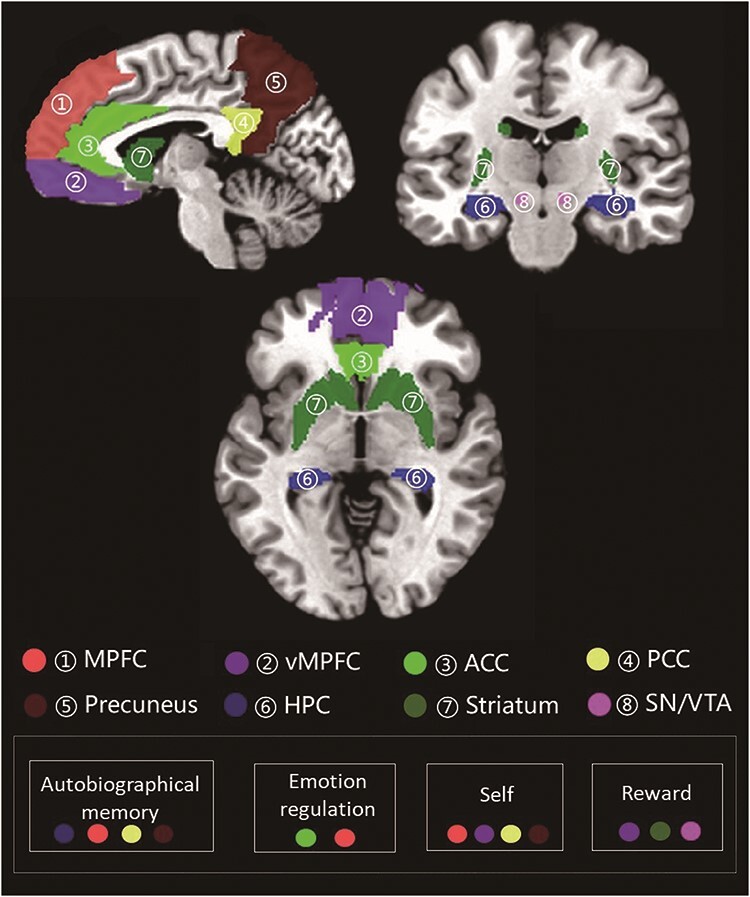
Nostalgia activates a complex neural network involving multiple brain regions responsible for self-reflection, autobiographical memory, emotion regulation, and reward processing. Research from PubMed Central identifies key areas including the medial prefrontal cortex (mPFC) and posterior cingulate cortex (PCC) for self-reflection, the hippocampus for autobiographical memory retrieval, the anterior cingulate cortex (ACC) for emotion regulation, and subcortical regions like the striatum, substantia nigra (SN), and ventral tegmental area (VTA) for reward processing.
For individuals with difficult childhoods, this neural processing becomes particularly interesting when encountering romanticized childhood content. The brain simultaneously activates memory networks while engaging in social comparison processes, often leading to conflicting neural signals. Some studies suggest that the serotonin transporter gene (5-HTTLPR) short allele influences how individuals recruit nostalgia to cope with aversive events, potentially explaining genetic variations in nostalgia responses.
The bittersweet nature of nostalgia becomes apparent in neuroimaging studies, which show simultaneous activation of both positive and negative affect circuits. This neural duality helps explain why people with difficult childhoods might experience complex emotional responses - their brains are processing both the appeal of nostalgic content and the painful disconnect from their own childhood experiences. Understanding these neural mechanisms provides insight into why certain nostalgic content might trigger strong emotional reactions while other content might be more easily processed or even beneficial.
Factors Influencing Emotional Responses to Childhood Nostalgia
Several psychological factors significantly influence how individuals with difficult childhoods respond to romanticized nostalgia posts. One of the most important factors is resilience - highly resilient individuals tend to use nostalgia more effectively as a coping mechanism when feeling lonely or distressed. According to research from Texas Christian University, resilience moderates nostalgia’s effectiveness, with more resilient people better able to extract positive aspects from nostalgic experiences without being overwhelmed by negative emotions.
Childhood trauma severity plays a crucial role in shaping responses. Those who experienced severe trauma or neglect often find romanticized childhood content particularly triggering, potentially causing reactivation of traumatic memories or feelings of inadequacy. In contrast, individuals with moderately difficult childhoods might experience more ambivalent responses, finding aspects of the romanticized content relatable while maintaining awareness of their different experiences.
Current psychological state significantly influences how nostalgic content is processed. People experiencing loneliness, sadness, or boredom tend to become more nostalgic and may respond more intensely to nostalgic stimuli. The connection between current emotional state and nostalgia response creates a cyclical pattern where negative emotions increase nostalgia, which in turn can either alleviate or exacerbate those emotions depending on various factors.
Social support systems also play a critical role. Individuals with strong social connections and support networks tend to have healthier responses to nostalgic content, using it as a way to strengthen social bonds rather than as a source of pain. Conversely, those with limited social support may find nostalgic content particularly challenging, as it highlights feelings of disconnection from idealized communal experiences.
Coping Mechanisms for Conflicting Feelings
People who experience difficult emotional responses to romanticized childhood nostalgia have developed various coping mechanisms to manage these conflicting feelings. One effective strategy involves cognitive reframing - consciously choosing to reinterpret nostalgic content as a reflection of others’ experiences rather than as a comparison to one’s own childhood. This cognitive shift helps reduce feelings of inadequacy or exclusion by recognizing that different people have different childhood experiences.
Another important coping mechanism involves selective engagement with nostalgic content. Many individuals learn to identify which types of nostalgic posts trigger negative responses and either avoid them or approach them with prepared psychological strategies. This selective engagement allows people to benefit from positive aspects of nostalgia while minimizing exposure to content that causes distress.
The research from PubMed Central suggests that people with difficult childhoods often develop sophisticated emotion regulation skills through necessity. These skills include mindfulness techniques to observe emotional responses without judgment, cognitive distancing to create psychological space between oneself and emotional triggers, and meaning-making processes to integrate difficult childhood experiences with present-day understanding.
Social connection emerges as a powerful coping mechanism. Rather than processing nostalgic feelings in isolation, many people find that discussing their experiences with trusted friends, family members, or support groups helps normalize their reactions and provides emotional validation. This social processing of nostalgic experiences transforms potentially painful encounters into opportunities for connection and understanding.
Finding Meaning Through Nostalgia: Transforming Pain into Growth
Despite the challenges posed by romanticized childhood nostalgia, many individuals with difficult childhoods find ways to transform these experiences into opportunities for growth and meaning-making. Nostalgia serves as an emotion regulation mechanism that can help people reframe their memories in a more compassionate light, finding aspects of resilience and strength in their childhood narratives that might have been overlooked during difficult times.
The research indicates that nostalgia can increase feelings of meaning in life and social connectedness, even for those with challenging childhoods. By engaging with nostalgic content through a lens of curiosity rather than comparison, some individuals discover universal human experiences that transcend specific childhood circumstances. This recognition of shared human experiences can foster connection and reduce feelings of isolation.
Importantly, the ability to derive meaning from nostalgic experiences often develops over time as people process their childhood experiences and integrate them into their broader life narrative. What might initially trigger painful responses can, with time and reflection, become a source of insight, compassion for oneself, and deeper understanding of human resilience.
For those particularly struggling with childhood trauma responses, professional support can provide valuable tools for processing these emotions. Therapeutic approaches that address childhood trauma often include techniques for working with memories, emotions, and social comparisons that arise when encountering nostalgic content, helping individuals develop healthier relationship with their past and present.
Sources
- Nostalgia Neural Mechanisms Research — Neural substrates and psychological functions of nostalgia processing: https://pmc.ncbi.nlm.nih.gov/articles/PMC9714426/
- TCU Psychology Expert Analysis - How nostalgia affects different personality types and its physical benefits: https://www.tcu.edu/news/2026/psychology-expert-explains-why-nostalgia-hits-us-so-hard.php
Conclusion
Individuals who experienced difficult childhoods emotionally respond to romanticized nostalgia posts with complex, often conflicted feelings ranging from alienation to moments of connection. The psychological factors influencing these reactions include childhood trauma severity, current emotional state, resilience levels, and social support systems, all of which shape how people process nostalgic content that may not align with their lived experiences. Through understanding the neural mechanisms of nostalgia, recognizing personal triggers, and developing effective coping strategies, people can transform potentially challenging encounters with romanticized childhood content into opportunities for growth, connection, and meaning-making. The key lies in acknowledging the validity of one’s own childhood experiences while developing the psychological flexibility to appreciate the diversity of human experiences without unhealthy comparison.
Nostalgia is fundamentally a bittersweet emotion involving co-activation of positive and negative affect. For individuals with difficult childhoods, encountering romanticized childhood representations creates cognitive dissonance due to different neural responses to nostalgic triggers. Research shows nostalgia involves brain regions associated with self-reflection (mPFC, PCC, precuneus), autobiographical memory (hippocampus), emotion regulation (ACC, mPFC), and reward processing (striatum, SN, VTA). The serotonin transporter gene (5-HTTLPR) short allele influences how individuals recruit nostalgia to cope with aversive events. Resilience moderates nostalgia’s effectiveness, with highly resilient individuals more likely to use nostalgia when feeling lonely. Nostalgia serves as an emotion regulation mechanism that reframes memories in a “rose-colored” manner, potentially helping individuals with difficult pasts find meaning and social connectedness despite conflicting feelings.
Research shows that when people activate thoughts of nostalgia, they report higher positive affect, greater optimism, and increased meaning in life. Nostalgia is considered a bittersweet emotion - while many people think of positive memories when nostalgic, research shows that neurotic or anxious individuals may find it an adverse experience. People with difficulty connecting with others don’t benefit from nostalgia as much as others do. Vicarious nostalgia - experiencing nostalgia through others’ social media posts - can provide positive effects even when the viewer wasn’t part of the original experience. People become more nostalgic when they’re bored, isolated, lonely, or sad. Importantly, nostalgia has physical benefits including pain tolerance and healthier lifestyle behaviors like increased exercise and healthy eating intentions.
