Social Acceptance Differences: LGBTQ+ Women vs. Men
Bisexual and homosexual women experience greater social acceptance than men due to sociological, cultural, and historical factors. Research shows significant acceptance disparities.
Is it true that bisexual and homosexual women face greater social acceptance than bisexual and homosexual men? What are the sociological, cultural, and historical factors that contribute to these differences in acceptance?
Yes, bisexual and homosexual women do face greater social acceptance than bisexual and homosexual men, with empirical research showing significantly higher acceptance rates for women’s same-sex relationships. This disparity is influenced by sociological theories like Baumeister’s “erotic plasticity,” cultural gender norms that view female sexuality as more fluid and acceptable, and historical patterns of research that have predominantly focused on men’s experiences. These factors collectively create a social landscape where lesbian and bisexual women encounter less discrimination and greater societal understanding compared to their male counterparts.
Contents
- Social Acceptance Differences Between LGBTQ+ Women and Men
- Sociological Factors Contributing to Acceptance Disparities
- Cultural Influences on Perceptions of LGBTQ+ Individuals
- Historical Context of LGBTQ+ Acceptance
- Impact of Gender Norms and Expectations
- Current Trends and Future Outlook
- Sources
- Conclusion
Social Acceptance Differences Between LGBTQ+ Women and Men
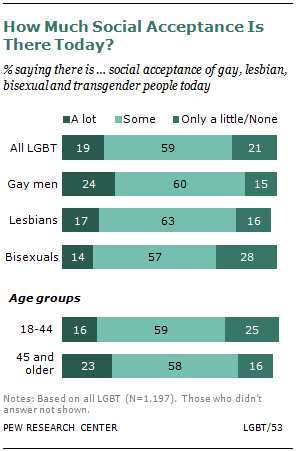
Empirical research clearly demonstrates that bisexual and homosexual women experience greater social acceptance than bisexual and homosexual men. According to Pew Research Center data, one-in-four LGBT adults report high social acceptance for lesbians compared to only 15% for gay men, while one-third report high acceptance for bisexual women versus just 8% for bisexual men. This substantial gap persists despite overall increasing acceptance of LGBTQ+ individuals across society, with 92% of LGBT adults noting greater acceptance over the past decade.
Several factors contribute to these acceptance disparities. The gendered nature of homophobia plays a significant role, as male homosexuality often triggers stronger negative reactions rooted in traditional masculinity norms. Women’s same-sex relationships frequently face less intense societal backlash, particularly when they don’t challenge traditional gender roles or reproductive expectations. Additionally, bisexual women experience higher acceptance rates than bisexual men, suggesting that male bisexuality encounters greater skepticism and social stigma than female bisexuality.
Discrimination patterns also differ significantly across genders. Pew Research found that 84% of gay men report experiencing at least one discriminatory incident compared to 49% of bisexuals, indicating that men face higher rates of direct prejudice. This pattern holds true across various domains including employment, housing, and social interactions, creating a more challenging environment for bisexual and homosexual men to navigate public life.
Sociological Factors Contributing to Acceptance Disparities
Sociological research provides several frameworks for understanding why bisexual and homosexual women face greater social acceptance than men. Baumeister’s “Differential Erotic Plasticity” theory suggests that women’s sexuality is more influenced by sociocultural factors like culture, religion, and peer influences, making it more malleable than men’s. This theoretical perspective posits that women’s sexual orientations may be more susceptible to environmental influences, potentially explaining why society views female same-sex relationships with greater acceptance.
Research examining sexual fluidity across multiple dimensions supports this perspective. Studies have found that women self-report greater change in sexual orientation over time than men, though recent research shows mixed results on gender differences in fluidity frequency. Sexual minorities generally experience more fluidity than heterosexual individuals, with plurisexual individuals (such as bisexual people) showing higher fluidity than lesbian/gay individuals. These patterns suggest that perceptions of women’s sexuality as more variable and changeable may contribute to greater social acceptance.
The concept of “gendered homophobia” also helps explain acceptance disparities. Traditional masculinity norms create stricter boundaries for men’s behavior, making male homosexuality more threatening to these norms. Women’s behavior faces fewer rigid constraints, allowing same-sex relationships among women to exist within broader cultural frameworks without challenging fundamental gender expectations as profoundly. This sociological dynamic creates a more permissive environment for female same-sex relationships while maintaining stricter boundaries for male ones.
Cultural Influences on Perceptions of LGBTQ+ Individuals
Cultural factors significantly shape how different societies perceive and accept bisexual and homosexual individuals. Research from 28 nations found that cultural variations exist in how sexual orientation is conceptualized, yet core prevalence rates remain relatively stable across different cultural contexts. This suggests that while cultural factors influence acceptance patterns, they may not fundamentally change the underlying nature of sexual orientations.
Media representation plays a crucial role in cultural perceptions. Lesbian and bisexual women often receive more positive media portrayals compared to gay and bisexual men, reinforcing social acceptance. Cultural narratives frequently frame women’s same-sex relationships as experimental, temporary, or less threatening to traditional social structures, while male homosexuality is often portrayed as more permanent and socially disruptive. These cultural scripts directly impact how society accepts different expressions of same-sex attraction.
Interestingly, research challenging previous hypotheses found no significant association between national indicators of gender equality, economic development, and individualism with sexual orientation prevalence. This suggests that factors beyond simple gender equality measurements contribute to acceptance patterns. Cultural attitudes toward sexuality, religious influences, and historical contexts all interact to create the complex landscape of acceptance that bisexual and homosexual women and men experience differently.
Historical Context of LGBTQ+ Acceptance
The historical context of LGBTQ+ acceptance reveals significant gender disparities in how society has viewed same-sex relationships. Before the late 1990s, research on sexual orientation focused primarily on men, with women’s experiences receiving minimal attention. This historical bias created a knowledge gap that has only recently begun to close, as researchers like Lisa Diamond later centered women’s experiences of sexual fluidity.
Early psychological and medical pathologization of same-sex attraction affected men and women differently. Male homosexuality was more consistently criminalized and medicalized throughout history, creating a legacy of stronger stigma. Women’s same-sex relationships, while also condemned, often received less severe legal and medical consequences, partly because they were seen as less threatening to social order and patriarchal structures.
The trajectory of social acceptance has also followed different paths for men and women. Gay men’s rights movements emerged earlier and faced more intense opposition, while lesbian and bisexual women’s acceptance has grown through different pathways, sometimes benefiting from cultural perceptions of women’s relationships as less threatening to traditional institutions. This historical divergence in experience continues to influence contemporary acceptance patterns, with bisexual and homosexual women building on different foundations than their male counterparts.
Impact of Gender Norms and Expectations
Traditional gender norms and expectations play a fundamental role in shaping social acceptance differences between bisexual and homosexual women and men. Patriarchal societies maintain strict expectations for male behavior, including heterosexuality as a marker of masculinity. When men violate these expectations by being bisexual or homosexual, they challenge not just sexual norms but fundamental concepts of male identity and social hierarchy.
Women’s behavior faces different constraints. Traditional gender roles allow for greater emotional intimacy and physical affection between women without automatically implying sexual relationships. This cultural context creates space for bisexual and homosexual women to exist within broader social frameworks while maintaining some level of acceptance. Women’s same-sex relationships are often viewed through a lens of experimentation or phase rather than fundamental identity, potentially reducing the perceived threat to social order.
The concept of “homohysteria” helps explain these differences. Homohysteria refers to cultural anxiety about homosexuality that intensifies when it’s perceived as threatening traditional gender roles. Because male homosexuality directly challenges masculine norms, it triggers stronger cultural reactions. Women’s same-sex relationships, by contrast, are less threatening to traditional gender roles, resulting in reduced cultural anxiety and greater social acceptance.
Current Trends and Future Outlook
Current trends suggest both continuity and change in social acceptance patterns for bisexual and homosexual women and men. While the gap in acceptance persists, overall acceptance continues to increase, with younger generations showing significantly higher acceptance levels across all LGBTQ+ identities. This generational shift suggests that acceptance disparities may narrow over time, though probably not disappear completely.
Personal connections and high-profile figures play crucial roles in driving acceptance. Pew Research found that 70% of LGBT adults report that knowing someone LGBT helps a lot with acceptance, and 67% cite LGBT figures as influential, with 66% mentioning non-LGBT allies. These social mechanisms may work differently for women and men, with personal connections potentially having greater impact on acceptance of bisexual and homosexual women.
Future acceptance patterns will likely be shaped by several factors: continued cultural evolution around gender norms, the visibility of diverse LGBTQ+ representations in media, and ongoing social movements advocating for equality. While bisexual and homosexual women may continue to experience greater acceptance, addressing the specific challenges faced by bisexual and homosexual men will require targeted approaches that acknowledge the unique forms of discrimination they encounter.
Sources
-
Pew Research Center Survey - Analysis of social acceptance differences between LGBT women and men: https://www.pewresearch.org/social-trends/2013/06/13/chapter-2-social-acceptance/
-
PubMed Central Study on Sexual Fluidity - Research examining gender differences in sexual orientation change and fluidity: https://pmc.ncbi.nlm.nih.gov/articles/PMC10289116/
-
Cross-National Sexual Orientation Research - Analysis of gender equality and sexual orientation prevalence across 28 nations: https://pmc.ncbi.nlm.nih.gov/articles/PMC7031179/
-
Baumeister’s Differential Erotic Plasticity Theory - Theoretical framework for understanding gender differences in sexual responsiveness: https://pmc.ncbi.nlm.nih.gov/articles/PMC10289116/
-
Discrimination Patterns Research - Study documenting higher discrimination rates for gay men compared to bisexual individuals: https://www.pewresearch.org/social-trends/2013/06/13/chapter-2-social-acceptance/
Conclusion
The evidence clearly demonstrates that bisexual and homosexual women experience greater social acceptance than bisexual and homosexual men, a pattern shaped by complex sociological, cultural, and historical factors. Pew Research data confirms this reality with measurable acceptance disparities, while theoretical frameworks like Baumeister’s “erotic plasticity” provide understanding of the underlying mechanisms. Cultural gender norms that view female sexuality as more fluid and less threatening to traditional structures create a more permissive environment for women’s same-sex relationships. Historically, the path to acceptance has differed for men and women, with women benefiting from different cultural frameworks and less intense pathologization.
As society continues to evolve, understanding these acceptance disparities becomes crucial for advancing LGBTQ+ equality. While overall acceptance increases, the specific challenges faced by bisexual and homosexual men require targeted attention that acknowledges the unique forms of discrimination they encounter. Future progress will depend on continued cultural evolution, increased visibility of diverse LGBTQ+ experiences, and efforts to address the gendered nature of homophobia that maintains these acceptance disparities. By recognizing and addressing these differences, society can move toward more equitable acceptance for all members of the LGBTQ+ community regardless of gender.
Research indicates that bisexual and homosexual women may experience different social dynamics compared to men, though the article doesn’t directly confirm greater social acceptance. Baumeister’s “Differential Erotic Plasticity” theory suggests women’s sexuality is more influenced by sociocultural factors like culture, religion, and peer influences, making it more malleable than men’s. Historical research focused primarily on men before the late 1990s, with Diamond’s work later centering women’s experiences of sexual fluidity. Studies examining sexual fluidity across multiple dimensions found women self-reported greater change in sexual orientation over time than men, though more recent research shows mixed results on gender differences in fluidity frequency. The article notes that sexual minorities generally experience more fluidity than heterosexual individuals, with plurisexual individuals (e.g., bisexual) showing higher fluidity than lesbian/gay individuals. Cultural factors influence how sexual fluidity manifests differently across genders, with women’s sexuality historically viewed as more variable. The research suggests that social acceptance patterns may relate to these differing perceptions of sexual fluidity between genders, though the article focuses more on fluidity than direct acceptance metrics.

The Pew Research Center survey confirms that bisexual and homosexual women face greater social acceptance than bisexual and homosexual men in the United States. One-in-four LGBT adults report high social acceptance for lesbians compared to only 15% for gay men, and one-third report high acceptance for bisexual women versus just 8% for bisexual men. This disparity persists despite overall increasing social acceptance, with 92% of LGBT adults noting greater acceptance over the past decade. Key drivers of acceptance include personal connections (70% say knowing someone LGBT helps a lot) and high-profile figures (67% for LGBT figures, 66% for non-LGBT allies). However, discrimination remains prevalent, with gay men experiencing higher rates than bisexuals—84% of gay men report at least one discriminatory incident compared to 49% of bisexuals. The data suggests cultural factors like gender norms contribute to these differences, with women’s same-sex relationships often viewed through a more accepting lens than men’s.
The research found no significant association between national indicators of gender equality, economic development, and individualism with sexual orientation prevalence across 28 nations for both men and women. Contrary to hypotheses that gender-egalitarian societies would have higher rates of bisexual and homosexual identities, the study revealed stable rates of heterosexuality, bisexuality, and homosexuality across nations, suggesting non-social factors may underlie much variation in human sexual orientation. The authors tested the hypothesis that women’s sexuality might be more influenced by social factors than men’s (based on Baumeister’s “erotic plasticity” theory), but found no evidence supporting stronger cultural influences on women’s sexual orientation. Prevalence rates for male homosexual identity were actually more variable across nations than lesbian identity rates, contrary to expectations of greater social acceptance for women. The study analyzed data from 191,088 participants in the 2005 BBC Internet survey, controlling for individual-level covariates including age and education level, and nation-level covariates including religion and national sex ratios. Multilevel modeling analyses showed no meaningful associations between sociocultural factors and sexual orientation measures, with variance partition coefficients indicating low cross-national variation (0.55% for men’s sexual identity, 1.13% for women’s). The researchers concluded that these findings question “the power of factors such as gendered norms, gender roles, and gender socialization to account for variations in the prevalence of sexual orientations across nations.” Despite cultural variations in how sexual orientation is conceptualized, the core prevalence rates remained relatively stable, suggesting biological factors may play a more significant role than previously hypothesized social factors.

